

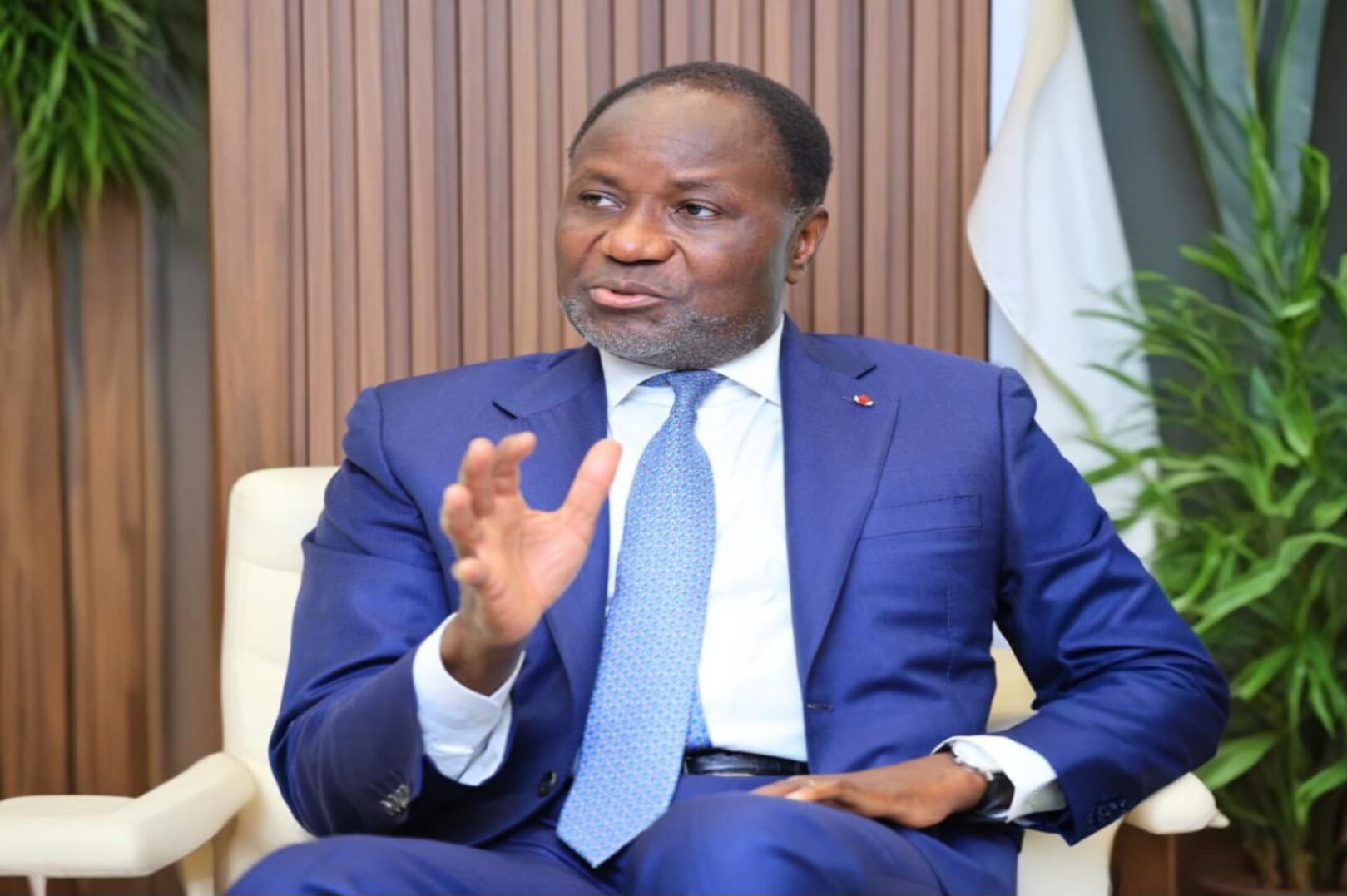
In an interview with Jeune Afrique, Ivorian Minister of Mines, Petroleum, and Energy Mamadou Sangafowa-Coulibaly, who has chaired the African Petroleum Producers Organization (APPO) since the beginning of the year, shared his perspective on the continent’s energy challenges. Amid dwindling financing, the climate transition, and the imperative of energy security, he advocates what he calls a “climate-realistic” approach and outlines Africa’s strategy to revive oil exploration and regain control over the value chain.
The issue is urgent. For several years, the exploration and development of new African oil fields have suffered from a lack of financing, affecting major operators, junior companies, and states alike. According to the current APPO president, the top priority is to reopen funding channels—a necessary condition to halt production declines and secure the continent’s energy supply. He notes that the trend is beginning to reverse, with some international financial institutions starting to relax their criteria, creating a window of opportunity as early as 2026.
But funding alone is not enough. Mamadou Sangafowa-Coulibaly emphasizes the need for stable, transparent, and predictable regulatory frameworks. While oil companies follow the resources and Africa is rich in them they also require legal and fiscal clarity. It is in this area that APPO intends to intensify its work with its 18 member states, from Algeria to South Africa, in order to harmonize practices and restore investor confidence.
Security remains a key factor. International and regional conflicts have highlighted the vulnerability of energy supply chains, as exemplified by the war in Ukraine. For the Ivorian minister, the response involves both investments in storage and transport infrastructure and the strengthening of local energy supply. Without political and security stability, he acknowledges, sustainable development is impossible—a challenge that involves both individual states and regional bodies such as the African Union.
At the heart of this strategy is the African Energy Bank (BAE), a long-anticipated project recently given a provisional headquarters in Abuja. According to Sangafowa-Coulibaly, the BAE has now entered its decisive phase. Final ratification is expected to allow the convening of a general assembly, the establishment of a board of directors, and the recruitment of senior staff. The goal is to have a fully operational institution by the end of the year.
Substantively, the minister’s approach challenges some prevailing dogmas. “Africa is not climate-skeptical, it is climate-realistic,” he asserts. Exploiting fossil fuels, in his view, does not preclude a trajectory compatible with climate objectives, particularly through low-carbon projects, such as the Baleine oil field in Côte d’Ivoire.
Beyond numbers and institutions, Mamadou Sangafowa-Coulibaly carries a political ambition: to make Africa’s voice heard on the global energy stage. This includes greater participation in major international conferences, alignment with the African Union’s position, and asserting a distinct, sustainable path. For the Ivorian minister, the goal is clear: energy should stop being an exported rent and become a driver of endogenous development.
In a world undergoing an energy reshuffle, Africa may be playing one of its last strategic cards. At the helm of APPO, Mamadou Sangafowa-Coulibaly intends to play it with pragmatism, ambition, and clarity.