

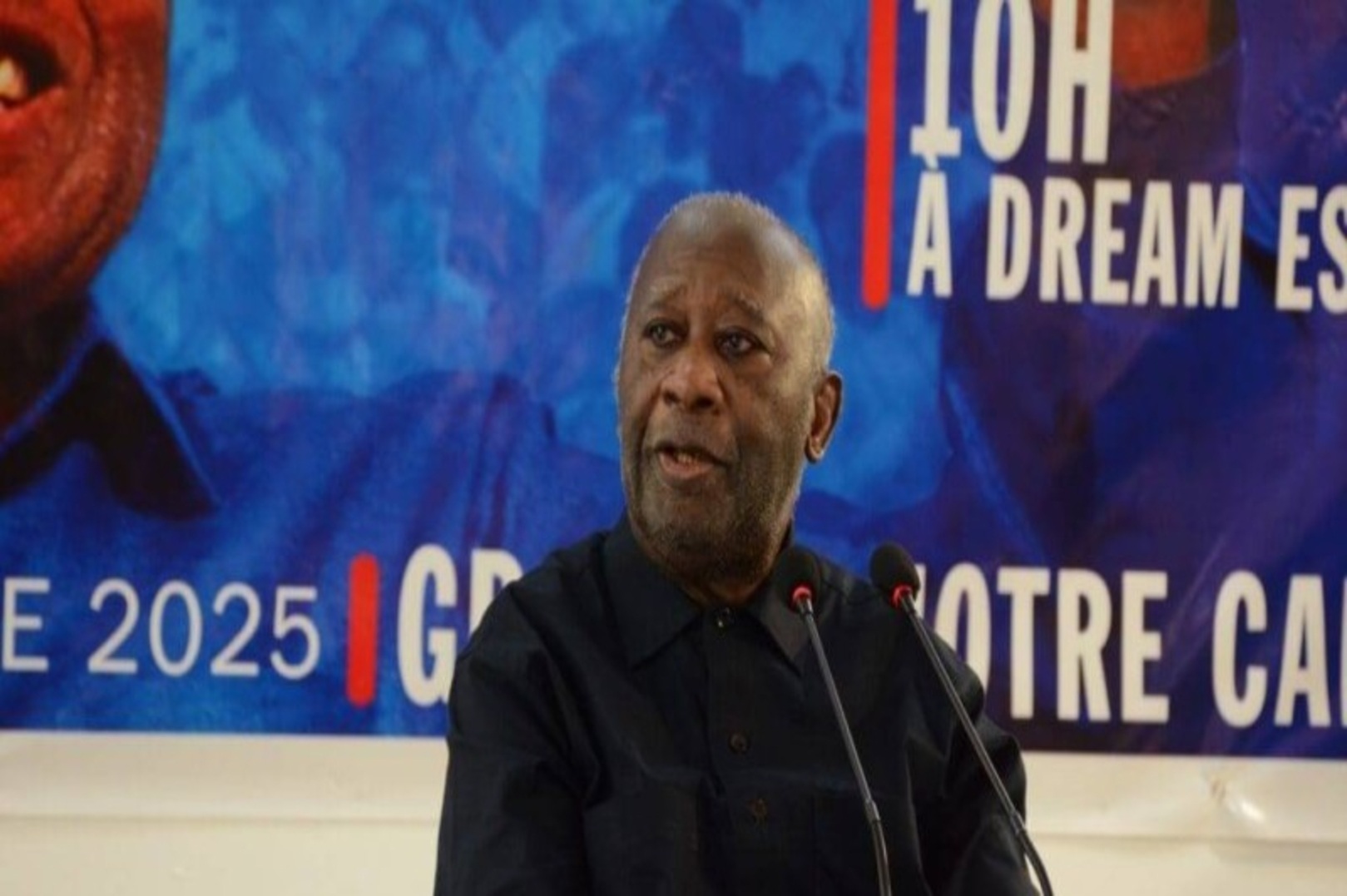
Arusha, June 26, 2025 – The African Court on Human and Peoples’ Rights has delivered its verdict in the case opposing former Ivorian President Laurent Gbagbo to the Republic of Côte d’Ivoire. In its ruling, the continental court rejected all allegations of human rights violations brought by the applicant against the Ivorian state.
Filed on September 7, 2020, Laurent Gbagbo accused Côte d’Ivoire of violating several of his fundamental rights through the process that led to his removal from the electoral roll. He cited breaches of the right to equality before the law, the right to a fair trial, the presumption of innocence, as well as his civil and political rights, including the right to run for presidential elections.
The applicant contested a 20-year prison sentence in absentia for complicity in armed robbery and embezzlement of public funds, handed down while he was detained by the International Criminal Court in The Hague. According to him, this conviction could not serve as the legal basis for his exclusion from the voter list, as it had not become final.
However, after examination, the African Court found that the Ivorian state had not violated any provisions of international human rights law. It concluded that Laurent Gbagbo had not proven he was subjected to unequal treatment or a violation of the presumption of innocence. The Court also ruled that the Independent Electoral Commission (CEI) and national courts had acted within the applicable legal framework.
Regarding political participation rights, the Court held that the restrictions imposed on Mr. Gbagbo stemmed from a judicial decision deemed final by Ivorian authorities, and that no evidence had been presented to refute this. As a result, the Court rejected all claims for reparation submitted by the former president, stating that no violation of his rights had been established.
The judgment was delivered in default, as the respondent state did not appear at the hearing. Each party shall bear its own legal costs, the Court ruled.