

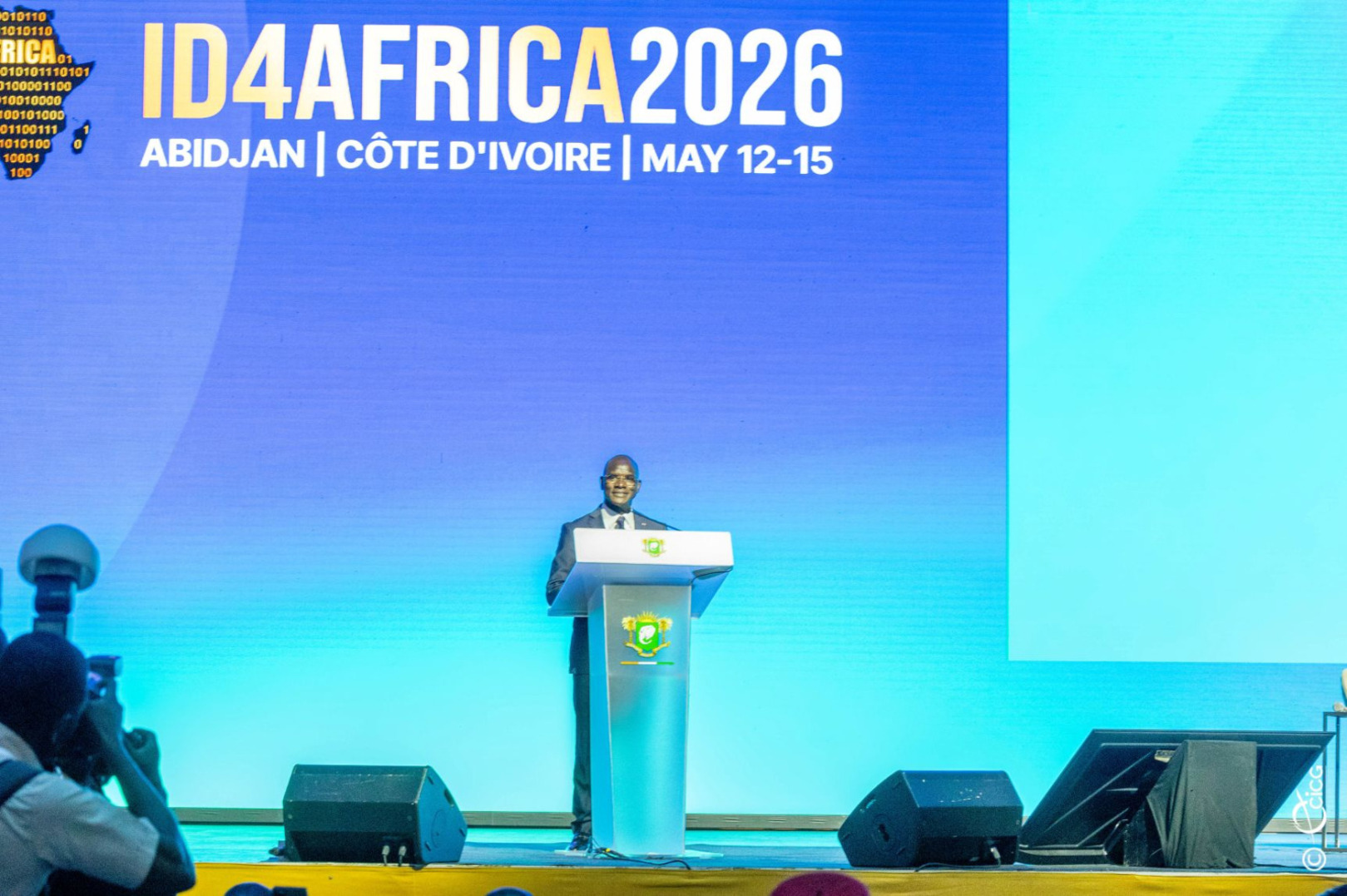
Vagondo Diomandé stated that Côte d’Ivoire is committed to progressively building an interoperable digital identity ecosystem that respects personal data protection and individual freedoms.
He made the remarks on Tuesday, May 12, 2026, during the official opening ceremony of the 2026 Annual General Assembly of ID4Africa held at the Parc des Expositions d'Abidjan in Port-Bouët. The event, themed “Digital Identity: From Digital Public Infrastructure to Digital Public Ecosystems,” was chaired by Vice President Tiémoko Meyliet Koné.
“This ecosystem will ultimately enable secure online authentication, simplified access to digital public services, electronic signatures, the digitalization of administrative procedures, and secure data exchange between authorized administrations,” the minister said.
He added that Côte d’Ivoire considers identity as a tool for inclusion, explaining that it facilitates access to financial services, insurance, healthcare, education, formal employment, and targeted social programs. “It therefore becomes a concrete instrument for reducing inequalities,” he noted.
According to Vagondo Diomandé, this year’s theme fully aligns with Côte d’Ivoire’s vision that identity should no longer be viewed merely as an administrative instrument, but rather as a strategic infrastructure supporting governance, security, social inclusion, and economic development.
The minister also recalled that, under the leadership of President Alassane Ouattara, Côte d’Ivoire has undertaken a deep transformation of its identification system based on three key pillars: a modernized civil registry, reliable personal identification, and the gradual digitalization of public services.
Regarding civil registration, he explained that the country has launched a broad modernization process aimed at ensuring effective registration of civil status records nationwide. On identification, Côte d’Ivoire has achieved a major milestone with the implementation of a modern secure identity document production system that meets international standards. At the same time, the National Register of Natural Persons continues to be progressively structured to establish a sustainable foundation for unique and verifiable identity.
The minister concluded that improved identification systems would help strengthen the fight against terrorism and transnational crime, secure borders, improve administrative investigations, better manage migration flows, and enhance the protection of citizens and residents.
For his part, Joseph J. Atick welcomed Côte d’Ivoire’s hosting of the gathering, which includes panel discussions and exhibitions.