

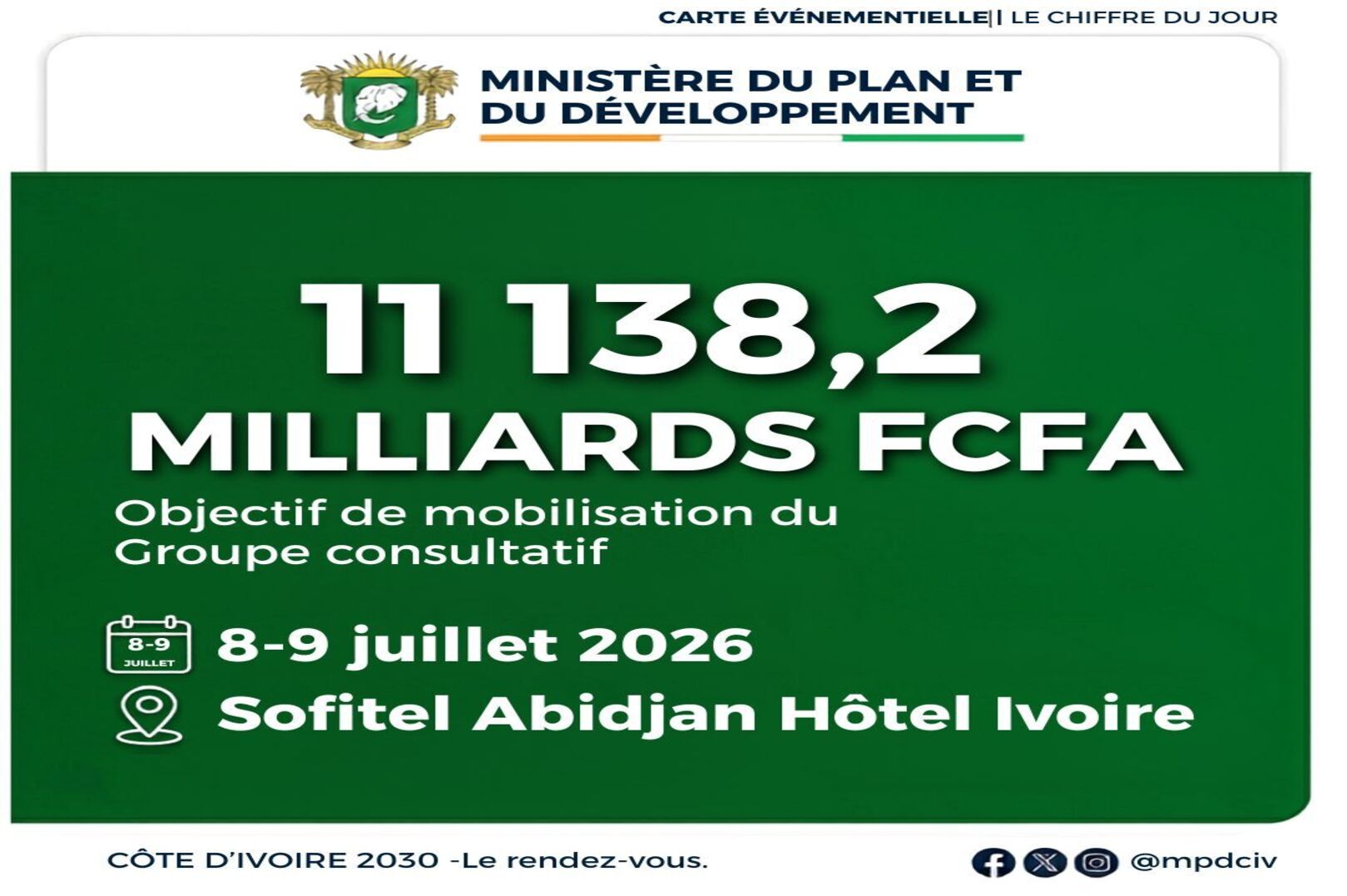
The Ivorian government will seek to mobilize CFA 11.138 trillion (approximately $19 billion) from development partners, private investors, and international institutions during a Consultative Group meeting scheduled for July 8–9, 2026, in Abidjan as part of efforts to finance the National Development Plan (PND) 2026–2030.
The funding is expected to complement domestic resources needed to implement the new five-year development strategy, whose total cost is estimated at CFA 114.839 trillion over the 2026–2030 period.
According to the government, the PND 2026–2030 serves as the country's roadmap for accelerating the structural transformation of the economy, strengthening industrialization, improving human capital, and promoting more inclusive and sustainable growth.
Minister of Planning and Development Souleymane Diarrassouba said the Abidjan meeting will provide a platform to present the country’s strategic priorities and investment opportunities to donors, development partners, and private investors.
The financing framework of the plan relies heavily on private-sector participation, which is expected to contribute CFA 80.615 trillion, representing more than 70% of the total projected funding. The public sector is expected to provide CFA 34.224 trillion, while CFA 26.795 trillion will be raised through financial markets.
Authorities said that of the CFA 11.138 trillion being sought during the Consultative Group meeting, CFA 7.750 trillion has already been identified through project loans. The remaining financing gap is estimated at CFA 3.389 trillion.
The Ivorian government is receiving support from several international partners in this effort, including the World Bank, the African Development Bank (AfDB), the European Union, and the United Nations system.
After posting one of Africa’s strongest economic growth performances over the past decade, Côte d’Ivoire aims, through the new development plan, to consolidate its position as a regional economic powerhouse while accelerating job creation, infrastructure development, industrial transformation, and climate resilience.
The July Consultative Group meeting will therefore serve as an important test of international partners’ confidence in the country’s economic outlook and in the government’s ability to implement its development agenda over the next five years.