

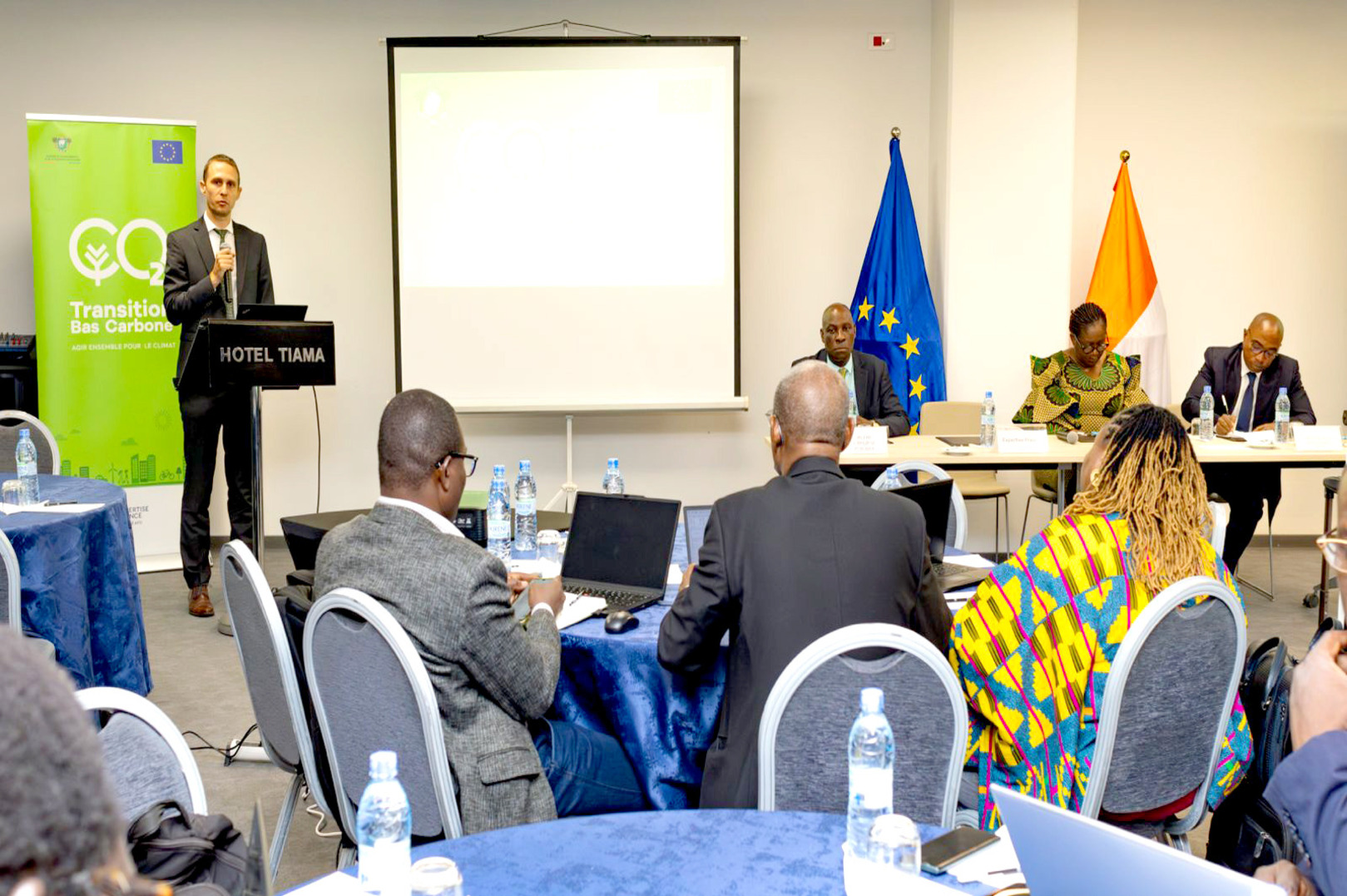
As part of efforts to build a robust and resilient national early warning system against climate-sensitive diseases such as malaria, dengue fever, cholera, diarrheal diseases, acute respiratory infections, and illnesses linked to water and environmental quality, the Ivorian government has developed two strategic tools: vulnerability and adaptation studies for the health sector in relation to climate change, and a climate-sensitive disease surveillance platform.
Both tools are currently being validated during a workshop that opened on Tuesday, May 19, 2026, in Plateau, Abidjan, under the chairmanship of Eugénie Doh épouse Gagne, Technical Adviser to the Minister of Health, Public Hygiene and Universal Health Coverage.
“The vulnerability and adaptation studies for the health sector will help us better understand the climate risks weighing on our healthcare system, identify vulnerable areas and populations, and, above all, define effective and sustainable adaptation measures,” she explained.
She further stated that the climate-sensitive disease surveillance platform “will promote better coordination between sectors, the integration of climate and health data, improved risk analysis, and faster decision-making in response to climate-related health threats.”
Speaking on behalf of Minister Pierre N’Gou Dimba, Eugénie Doh épouse Gagne reaffirmed the Ivorian government’s strong commitment, under the leadership of the Ministry of Health, to building a health system resilient to the effects of climate change, in line with national and international commitments on health and environmental issues.
According to Guillaume Vermeulen, Low Carbon Transition (TBC) Project Manager at Expertise France, the vulnerability and adaptation study covered five geographical areas: Grand-Lahou, Korhogo, Man, Dimbokro, and Abidjan.
“It analyzed ten climate-sensitive diseases over six years of health data. It combined climate projections for 2050 and 2100 with everyday epidemiological realities. To date, this is the most comprehensive assessment ever conducted on the vulnerability of Côte d’Ivoire’s health sector to climate change,” he said.
As for the climate-sensitive disease surveillance platform, it is the result of at least nine months of methodical work involving 14 partner institutions, the configuration of 165 data elements, the creation of 12 operational dashboards, and the training of 40 agents.
These two strategic studies were commissioned under the leadership of the Ministry of Environment, in partnership with the Ministry of Health, through the Low Carbon Transition (TBC) Project, funded by the European Union and jointly implemented with Expertise France.