

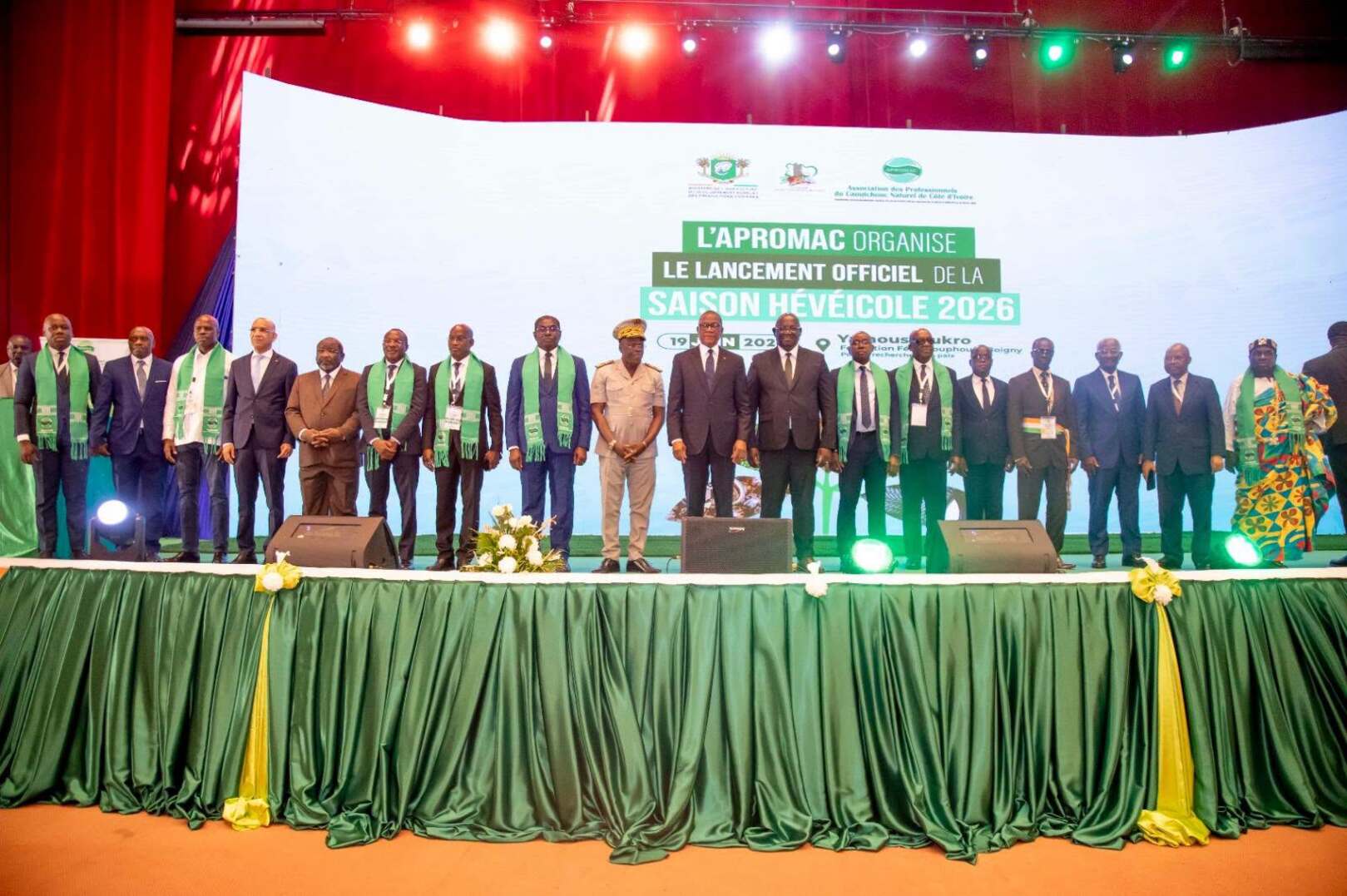
Côte d’Ivoire has unveiled a series of reforms designed to increase the share of revenue received by rubber producers, as the country officially launched its 2026 rubber production season on Friday in Yamoussoukro.
Speaking at the launch ceremony, Agriculture, Rural Development and Food Crops Minister Bruno Nabagné Koné praised the performance of the rubber sector, describing it as a strategic pillar of the national economy. According to the minister, the industry provides livelihoods for more than 1.2 million people and remains one of the country’s most important agricultural value chains.
The government announced several measures aimed at strengthening producers’ earnings and improving the sector’s long-term competitiveness.
Among the key reforms is the permanent removal of the 2 CFA francs per kilogram discount previously applied to producers. Authorities also approved an increase in the share of the net reference price allocated to farmers, raising it from 63% to 66%.
In addition, incentive bonuses paid within the sector will now be capped at 10 CFA francs per kilogram. Officials say the measure is intended to maintain market stability while ensuring a fair distribution of value across the supply chain.
Koné welcomed the consensus reached between producers and industrial operators, describing it as an important step toward preserving harmony within the industry. He stressed that the new measures would be strictly enforced by the Rubber, Oil Palm and Coconut Council.
The reforms form part of broader efforts by the Ivorian government to improve the living conditions of rubber growers, encourage greater local processing of raw materials and strengthen the international competitiveness of Côte d’Ivoire’s rubber industry.
As the world’s leading natural rubber producer in Africa, Côte d’Ivoire has increasingly sought to move up the value chain by promoting domestic processing and creating more value from its agricultural exports.
The measures announced at the opening of the 2026 campaign are expected to provide additional income to thousands of smallholder farmers while supporting the sustainable growth of the sector.