

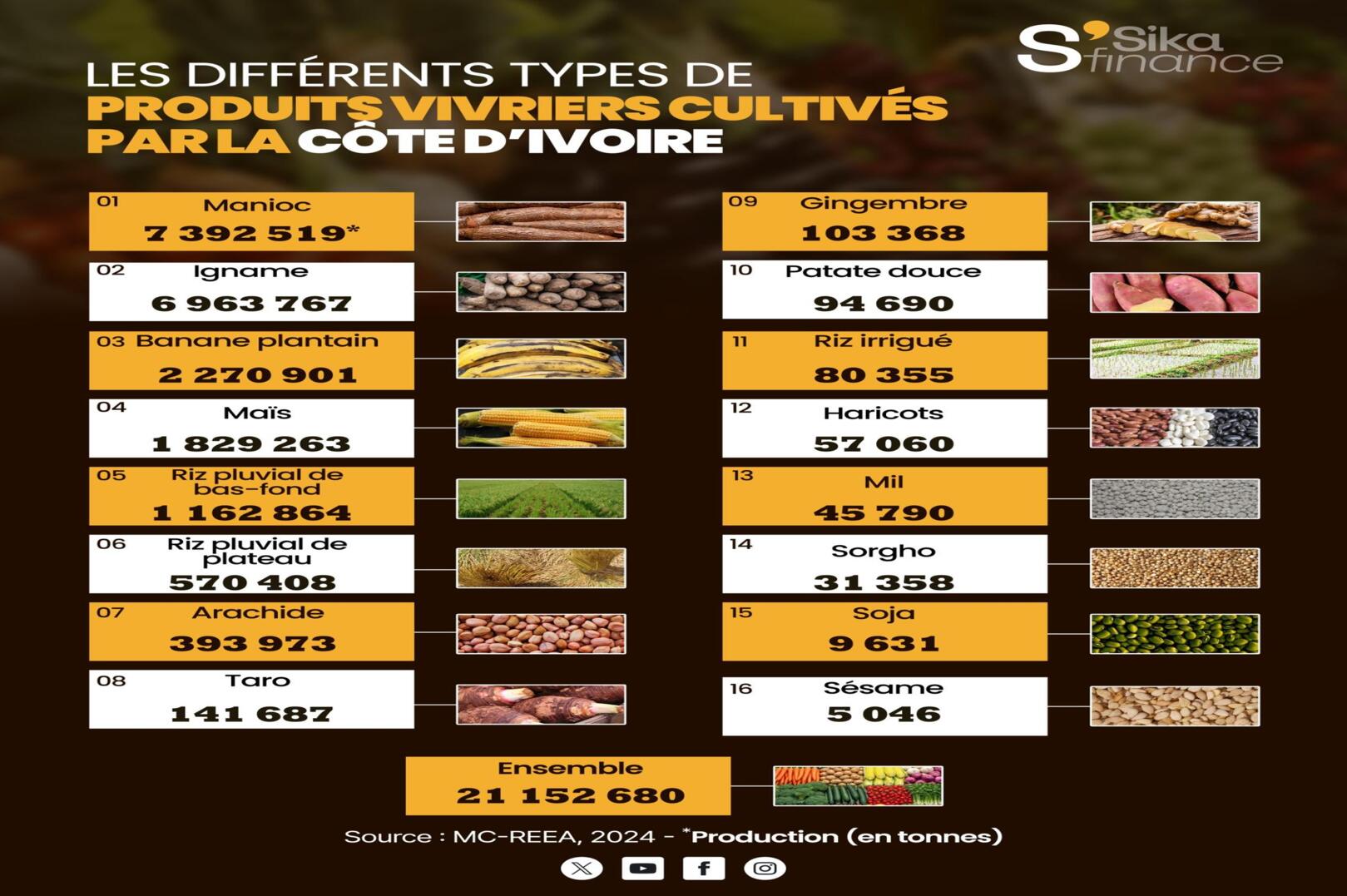
Côte d’Ivoire produced 21.15 million tonnes of food crops during the 2024-2025 agricultural season, with cassava, yam and plantain accounting for nearly four-fifths of total output, underscoring the sector’s growing role in the country’s food security strategy.
According to agricultural production data, cassava remained the country’s leading food crop with 7.39 million tonnes, followed by yam at 6.96 million tonnes and plantain at 2.27 million tonnes. Together, the three crops represented approximately 79% of Côte d’Ivoire’s total food crop production.
The figures highlight the importance of staple foods in supporting domestic consumption and strengthening food sovereignty in West Africa’s largest cocoa-producing nation.
Regional production data showed that the Gontougo region emerged as the country’s largest food-producing area, generating 2.24 million tonnes during the period. Cassava production was particularly concentrated in the regions of San Pedro, Sud-Comoé and La Mé, while Marahoué maintained its position as the leading producer of plantain.
Agriculture remains a cornerstone of Côte d’Ivoire’s economy, employing a significant share of the population and contributing to both rural incomes and national economic growth. While the country is globally known for its cocoa and cashew exports, authorities have increasingly prioritized food crop development to reduce dependence on imports and improve resilience against external shocks.
Industry analysts say the sustained growth of cassava and yam production reflects rising domestic demand and expanding opportunities for agro-processing. Cassava, in particular, plays a strategic role in the production of attiéké, one of the country’s most widely consumed foods, as well as other processed products aimed at regional markets.
The latest production figures also underscore the need for continued investment in storage infrastructure, transportation networks and agricultural transformation facilities to reduce post-harvest losses and increase value addition across the food supply chain.
As Côte d’Ivoire pursues its agricultural modernization agenda, policymakers view the food crop sector as a key driver of food security, employment creation and sustainable economic development.