

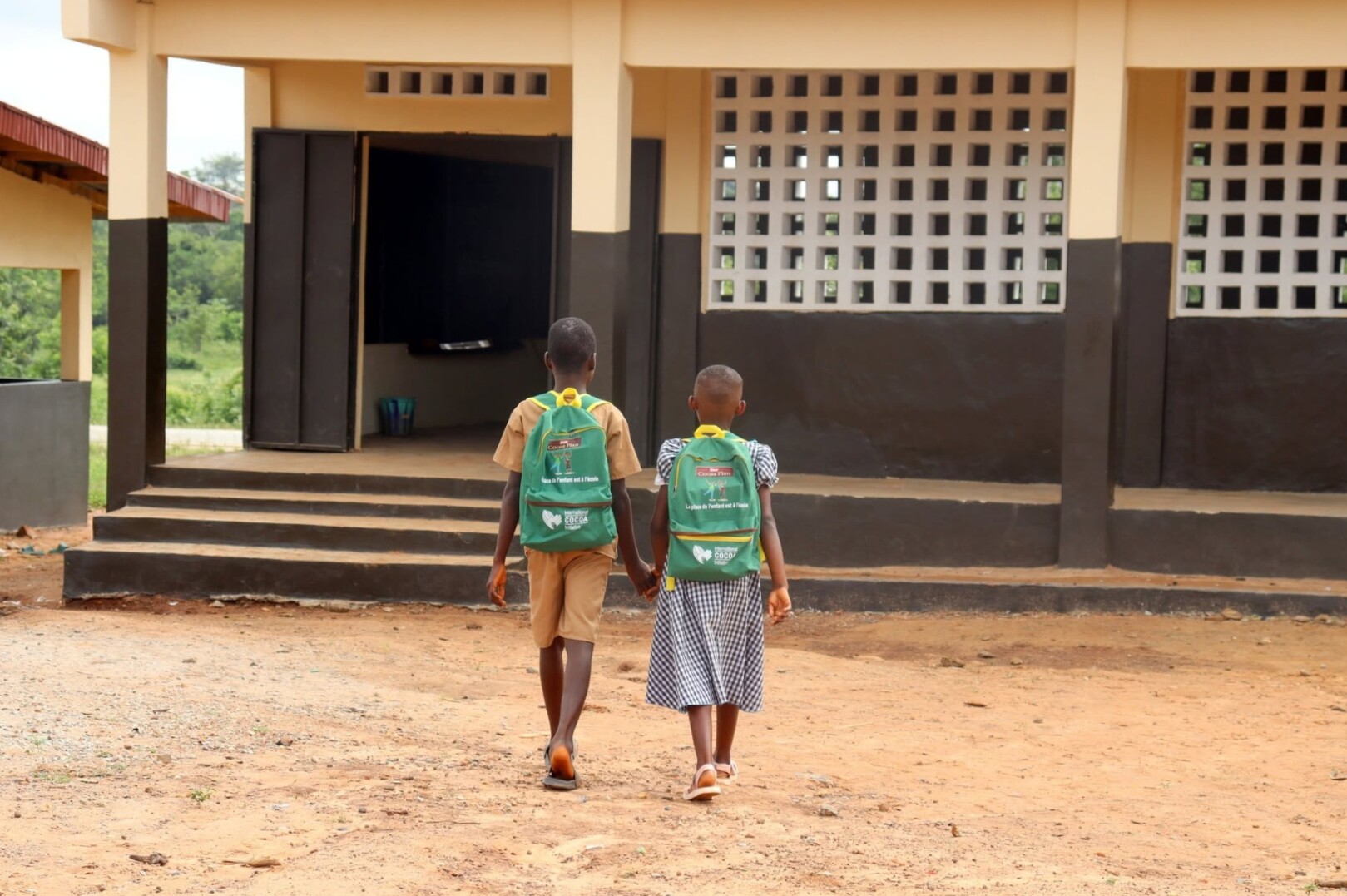
Côte d’Ivoire has implemented several mechanisms aimed at carrying out prevention and child protection actions, as well as coordinating all national initiatives to eliminate child labor.
The Marahoué region (central-west), a major agricultural area, is at the heart of these efforts. To effectively combat child labor and promote school attendance, the Ivorian government has established Child Protection Committees (CPCs) in villages, ensuring that no child is exploited in cocoa farming.
In Zaguiéta, in the Bouaflé department for example, the Child Protection Committee is very active. “We also report cases of forced marriage as well as all other forms of violence against children,” explains Trazié Bi Tiessé, president of the CPC. The Marahoué region had 80 committees as of March 2026.
In the Indénié-Djuablin region, another major agricultural production zone, similar vigilance is observed.
Members of the CPC in Kirifi, in the Abengourou department, hold weekly meetings to identify at-risk situations. Their actions help keep children away from farm work and ensure their continued education.
“Awareness efforts are bearing fruit. In Kirifi, there are no school-age children working in the fields,” assures Cécile Adagra, head of the village CPC.
In the Indénié-Djuablin region, 60 CPCs were recorded as of June 2025.
According to the government report (2011–2025), the number of Child Protection Committees increased from 700 in 2018 to 3,313 in 2024.
In Côte d’Ivoire, children are protected against all forms of exploitation. The country has established a legal and institutional framework to fight child labor. The National Monitoring Committee for Actions to Combat Trafficking, Exploitation, and Child Labor (CNS) and the Interministerial Committee on the Fight Against Trafficking, Exploitation, and Child Labor were created for this purpose.
Since then, authorities have remained vigilant. First Lady Dominique Ouattara chaired on Tuesday, June 2, the second annual dialogue on the follow-up of the Child Protection Partnership Agreement between Côte d’Ivoire and the United States, signed in December 2022. Under this partnership, more than 4 billion CFA francs have been allocated to NGOs engaged in the fight against trafficking, exploitation, and child labor. The program has supported 858 vulnerable families and reached 3 million people through 230 awareness campaigns.
Côte d’Ivoire is now considered a model country in the fight against child labor, with results recognized by the international community. Over the past ten years, the national prevalence rate of child labor across several economic sectors has declined.
These achievements were confirmed in September 2023 by the USDOL report on the worst forms of child labor, titled “Findings on the Worst Forms of Child Labor.” The report stated that four countries (Argentina, Colombia, Côte d’Ivoire, and Uzbekistan) out of 131 evaluated achieved the highest rating, meaning significant progress in the fight against child labor. Côte d’Ivoire was therefore the only African country to receive this top rating in the U.S. Department of Labor ranking.
To achieve these results, the Ivorian government has implemented several initiatives, including the national early warning mechanism, data collection, intervention, and decision-making system known as the Child Labor Monitoring System in Côte d’Ivoire (SOSTECI). The fight against child labor is also a key component of the National Strategy for Sustainable Cocoa Farming.
In addition to intensified community awareness campaigns, the country has a sub-directorate of the Criminal Police responsible for combating child labor and juvenile delinquency.