

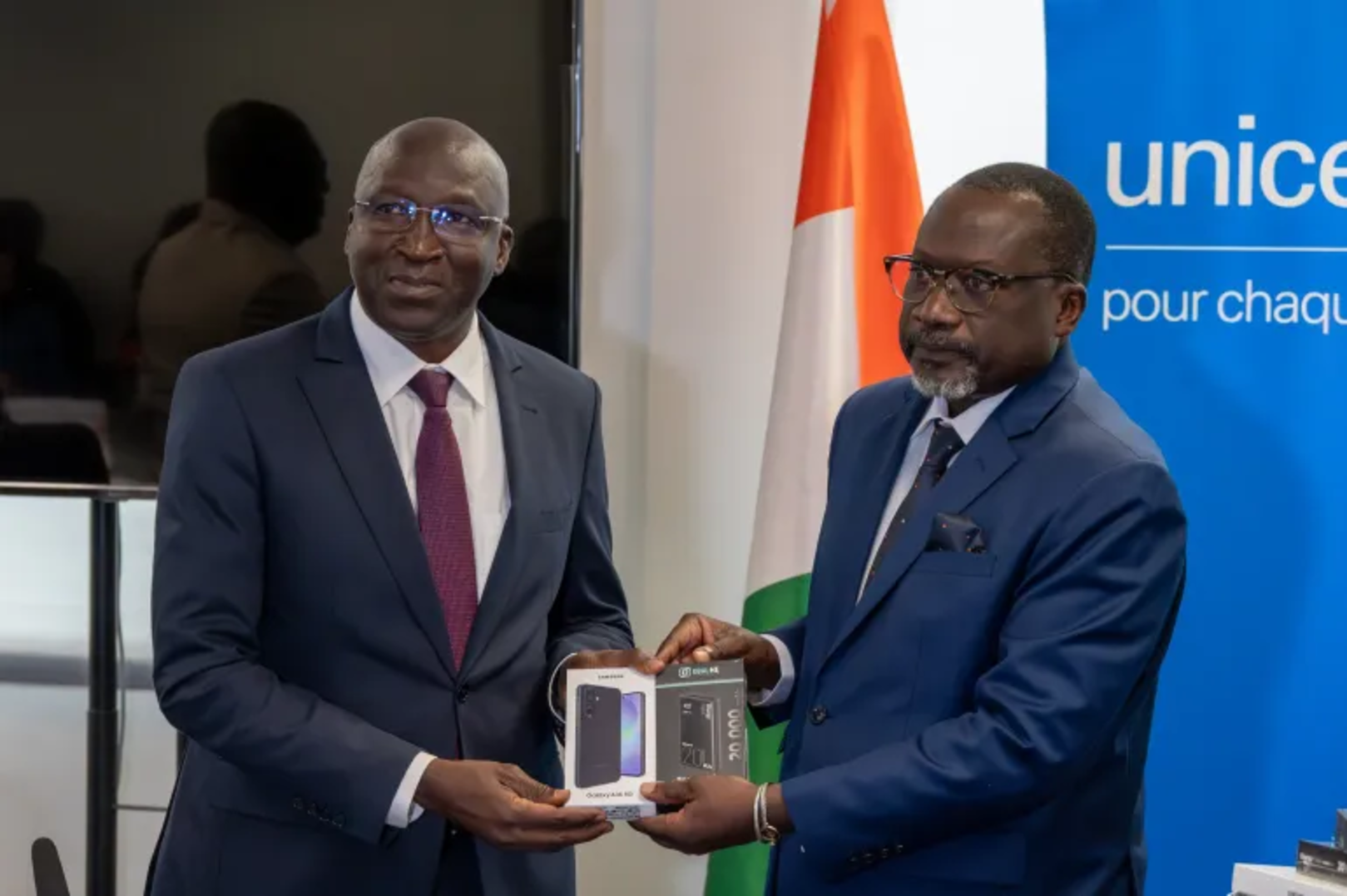
Côte d’Ivoire is expanding digital tools for community healthcare in the northeastern Gontougo region, with UNICEF and its partners providing more than 106 million CFA francs ($170,000) worth of computer equipment.
The support includes 650 devices: 380 smartphones for community health workers and 270 tablets for their supervisors, including nurses and state-certified midwives.
The equipment is being used to expand mHealth.ci, an offline medical assistance platform designed to support health workers in communities where internet connectivity can be limited.
The application helps frontline workers follow clinical protocols, improve patient care and collect health data. Information recorded offline can later be transmitted to the national health information system once an internet connection becomes available.
The devices are also accompanied by solar-powered portable batteries, helping health workers use the technology in areas where access to electricity remains unreliable.
The programme is supported by UNICEF, the Mastercard Foundation, the Canadian government and Côte d’Ivoire’s own resources.
The Gontougo deployment follows a pilot programme in the Poro region. Following encouraging initial results, authorities and partners decided to expand the digital health platform to other parts of the country.
For Côte d’Ivoire, the initiative reflects a broader effort to modernise community healthcare by putting digital tools directly in the hands of frontline workers.
The challenge now is to ensure that the technology remains operational over the long term through training, equipment maintenance, connectivity and continued support for community health workers.
In rural areas, where distance, electricity and internet access can complicate healthcare delivery, an offline digital platform could offer a practical way to bring medical support closer to communities.