

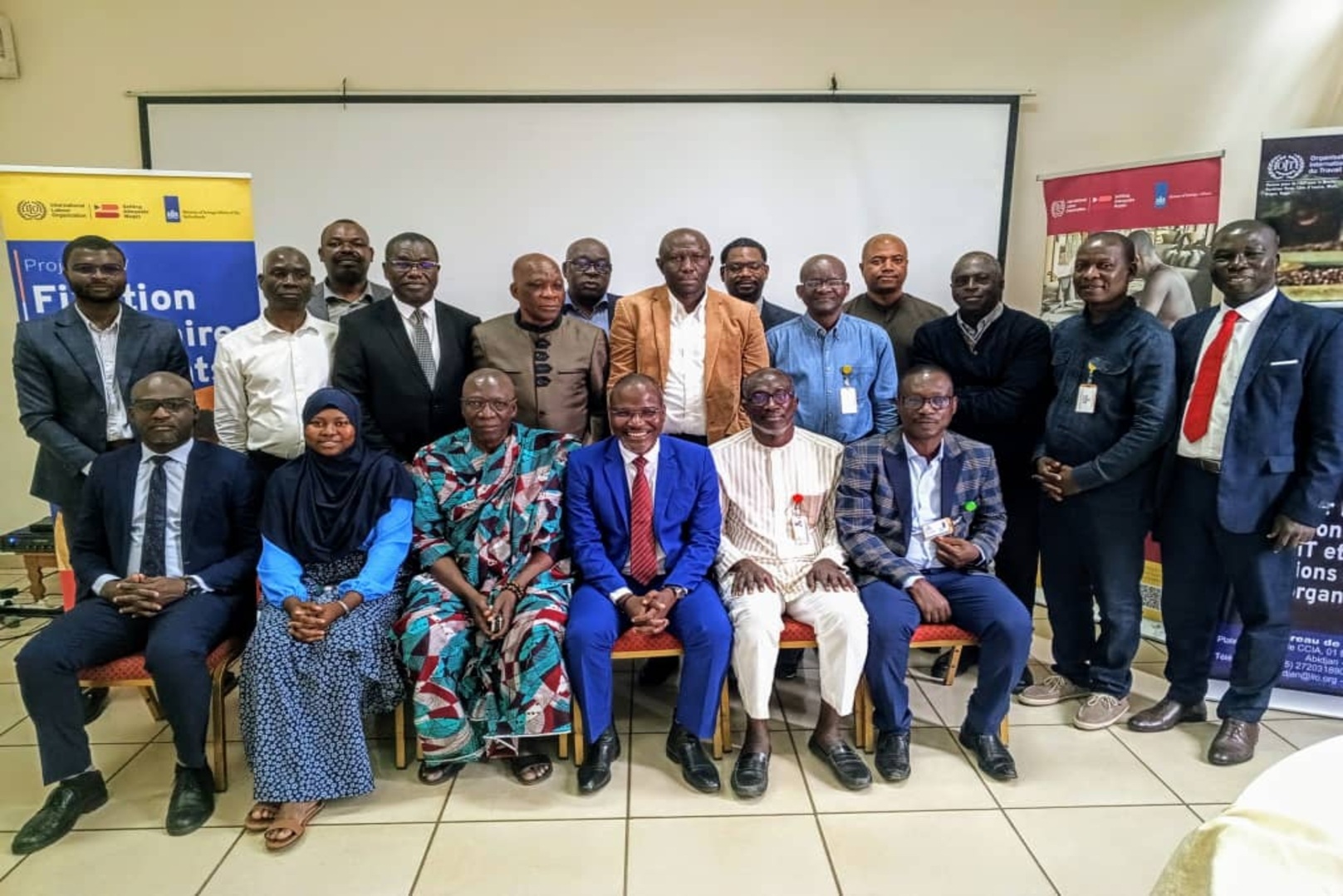
The International Labour Organization (ILO) has reaffirmed its commitment to supporting the world of work in Côte d'Ivoire, emphasizing the importance of a constructive and ongoing social dialogue. This declaration was made on Thursday, September 11, 2025, in Dabou, during a capacity-building workshop for members of the Permanent Independent Consultative Commission (CIPC), in preparation for the 2026 national wage negotiations.
"Through its Decent Wage Setting (SAW) and Decent Wage Setting in Agriculture (SAW-A) projects, the ILO is supporting the Ivorian world of work by helping improve what is already being done well. It is well known that social dialogue is deeply rooted in the country, with mechanisms that are even envied by some of its neighbors," said Ulrich Djè, national coordinator of the SAW and SAW-A projects, representing the Director of the ILO Country Office.
The workshop in Dabou aims primarily to equip CIPC members—a bipartite body responsible for making recommendations on wage levels to be negotiated at the national level. Participants are receiving training on international principles, national legal frameworks, global best practices, and statistical analysis methods necessary for conducting credible and effective wage negotiations.
This ILO initiative, supported by the governments of the Netherlands and Germany, seeks to help the Ivorian government establish a formal, fair, and evidence-based wage-setting system.
According to the SAW project coordinator, what makes the wage negotiation process unique is that no single party decides alone. “Once negotiations between employers and workers are complete, they turn to the government, which analyzes the economic indicators and determines what is feasible before validating the consensus,” he explained.
For his part, Mar Mao, interim president of the CIPC, expressed gratitude to the ILO for organizing the workshop, which he described as an important opportunity for the commission to prepare. “We are here to gain new skills to successfully conduct upcoming negotiations with the government. This capacity building will help us move toward fair and adequate wage setting,” he stated.
In addition to ILO experts, the workshop brings together a specialized consultant and around twenty CIPC members representing both employer and worker organizations. The training runs from September 11 to 13, 2025, in Dabou.