

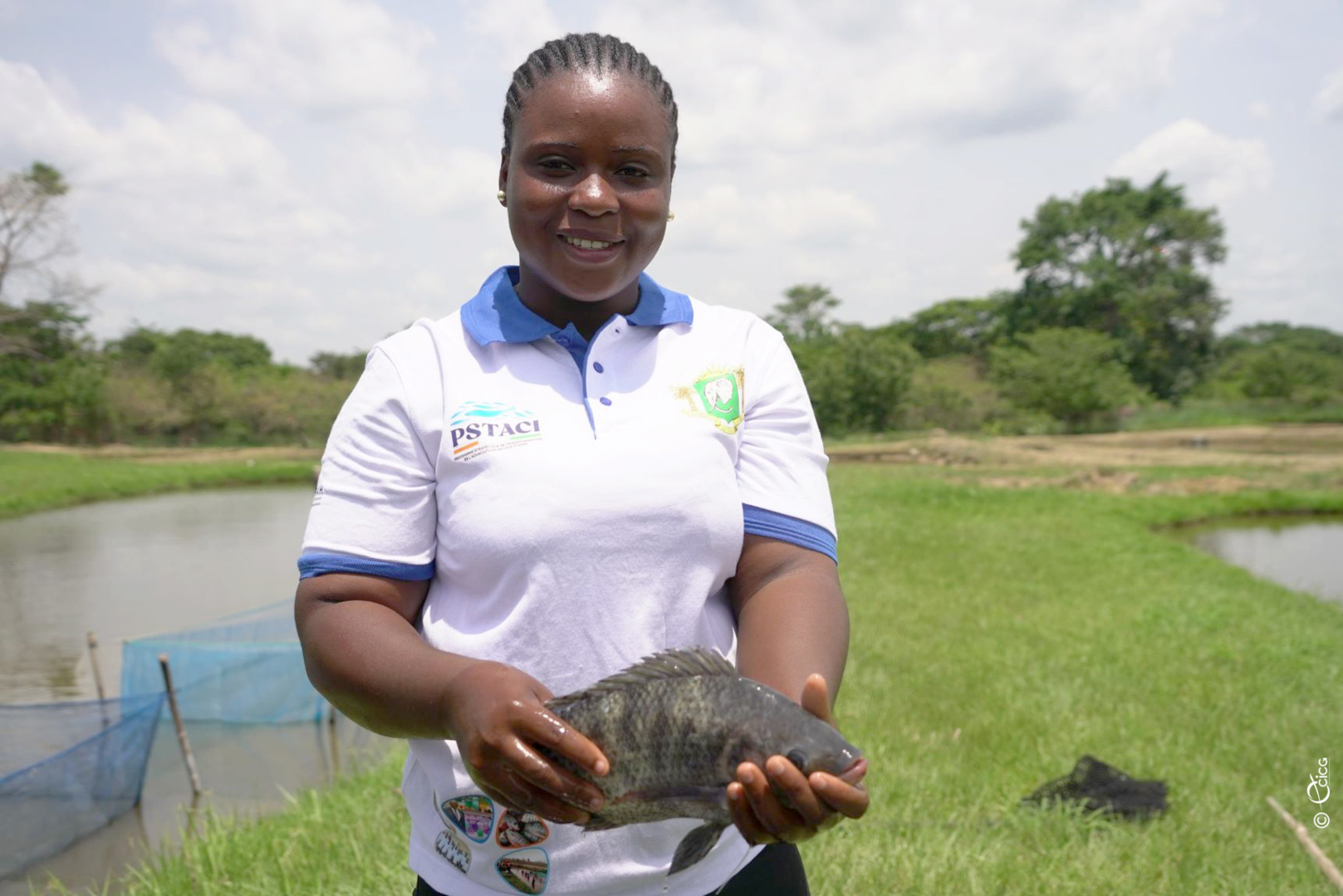
From 2011 to 2024, the fisheries sector has established itself as an important driver of job creation in Côte d’Ivoire. It also contributes to strengthening food security.
In the subsectors of fishing and aquaculture, a total of 680,000 jobs have been generated to date, including 100,000 direct jobs and 580,000 indirect jobs.
“Fish farming is a profession of the future that feeds its practitioner. But to make profits in this sector, one must be patient and passionate,” says Zeregbé Yacé, a fish farming technician, met at the Koubi fish farm in the Bélier region.
In terms of production, national volumes of fisheries products increased from 55,864 tonnes in 2011 to 94,553 tonnes in 2024. Despite this growth, fish remains one of the main imported food items. In 2023, national demand was around 730,000 tonnes, while local production covered less than 15% of the needs.
To fill this gap, several initiatives have been undertaken, including the structuring of the aquaculture sector through the creation of the National Association of Aquaculturists (ANAQUACI), the modernization of production infrastructure, and the distribution of 25 million improved fingerlings. These efforts have helped increase the annual production of fingerlings.
This momentum is supported by structuring programs such as the Strategic Program for the Transformation of Aquaculture in Côte d’Ivoire (PSTACI), which aims to achieve a production of 150,000 tonnes of fish per year by 2030.
“Two main objectives were set within this program: to improve aquaculture production and to encourage investment in the sector, both private and public, with the support of the State,” explains Modibo Samaké, coordinator of PSTACI.
Through these reforms and investments, the government aims to gradually reduce the country’s dependence on imports and promote food sovereignty in fisheries products.