

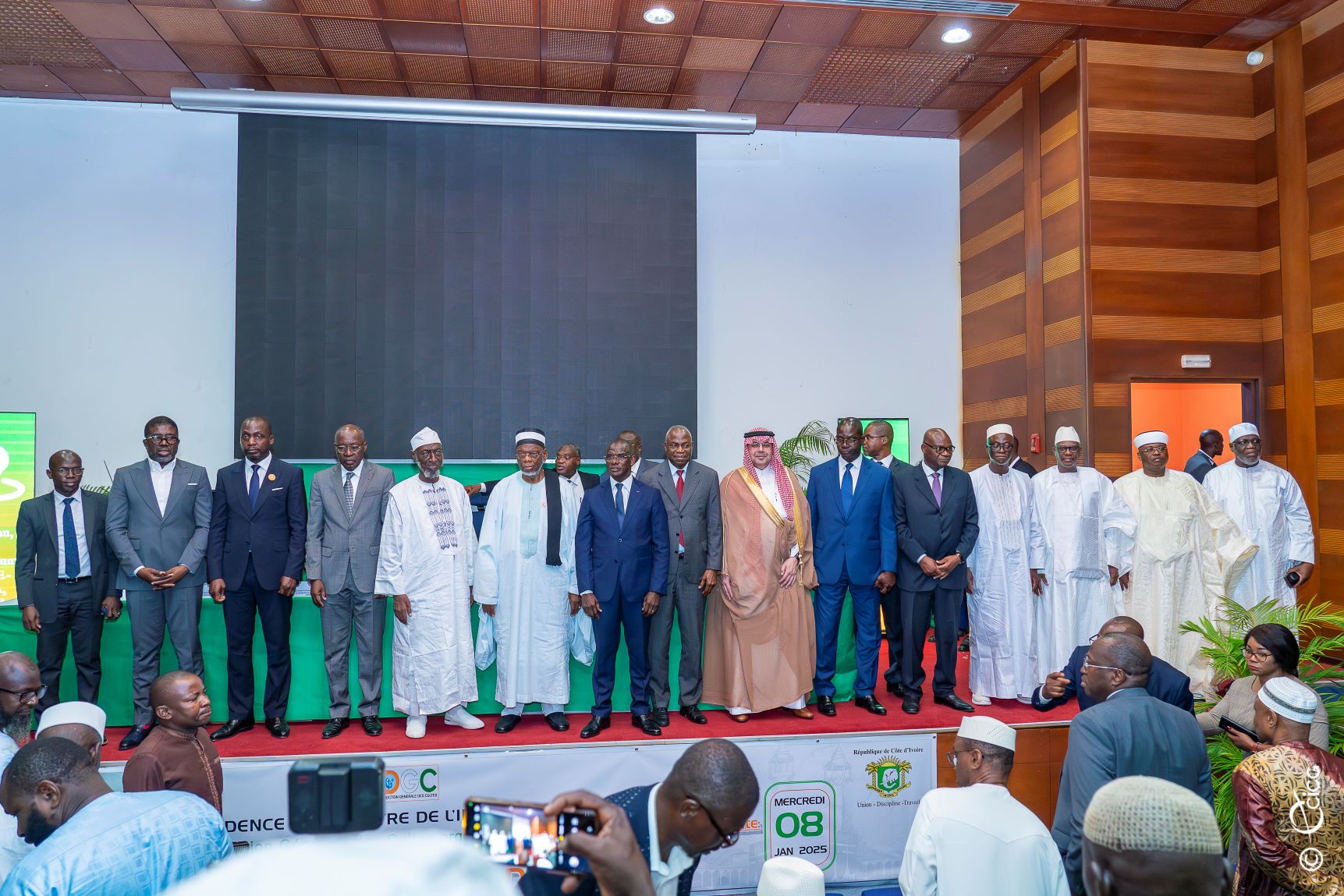
As in 2024, the cost of Hajj 2025 has been set at 3.25 million CFA francs, with the quota for Ivorian pilgrims remaining unchanged at 10,000. The Minister of the Interior and Security, Vagondo Diomandé, announced this on Wednesday, January 8, 2025, during the launch ceremony for the 2025 edition of Hajj, the fifth pillar of Islam, held in Abidjan-Plateau.
The 10,000 pilgrims will consist of 7,000 for the state contingent and 3,000 for private operators. Minister Diomandé explained that the price had not increased, thanks to the "generosity of President Alassane Ouattara."
To meet new directives from Saudi Arabia, Vagondo Diomandé also announced three groups of private operators — Baraka Hajj, Firdaous Hajj, and Hajj Mabrouk — that have been granted approval to organize Hajj 2025. "This system has been put in place to ensure participation from all," he said, explaining that these three groups represent all private operators involved.
Cheick Al Aima Ousmane Diakité, president of the Council of Imams, Mosques, and Islamic Affairs (COSIM), used the opportunity to make recommendations. He urged both public and private Hajj organizers to prioritize commitment and devotion to the noble cause of Islam, reminding them of their responsibilities. He also called on the 2025 Hajj candidates to maintain discipline and prepare rigorously.
The Director-General of Religious Affairs, Massemba Bamba, presented the timeline for Hajj 2025. The enrollment process will begin with awareness campaigns from January 9 to 22, 2025. The platform www.sygepci.com will open for pilgrim identification on January 23, followed by medical consultations starting January 27. Treasury services will begin on January 29, and fingerprinting will start the same day. Hajj 2025 will take place in June.
The ceremony, organized by the Directorate General of Religious Affairs in collaboration with the Hajj Commission, was attended by the Ambassador of the Kingdom of Saudi Arabia to Côte d'Ivoire, Saad Bin Bakheat Al Qathami, along with a large Muslim community comprising religious leaders, as well as public and private operators.