

INP-HB/PARTNERSHIP: INP-HB AND HARVARD LAY THE FOUNDATION FOR A SCIENTIFIC PARTNERSHIP ON COCOA FARMING
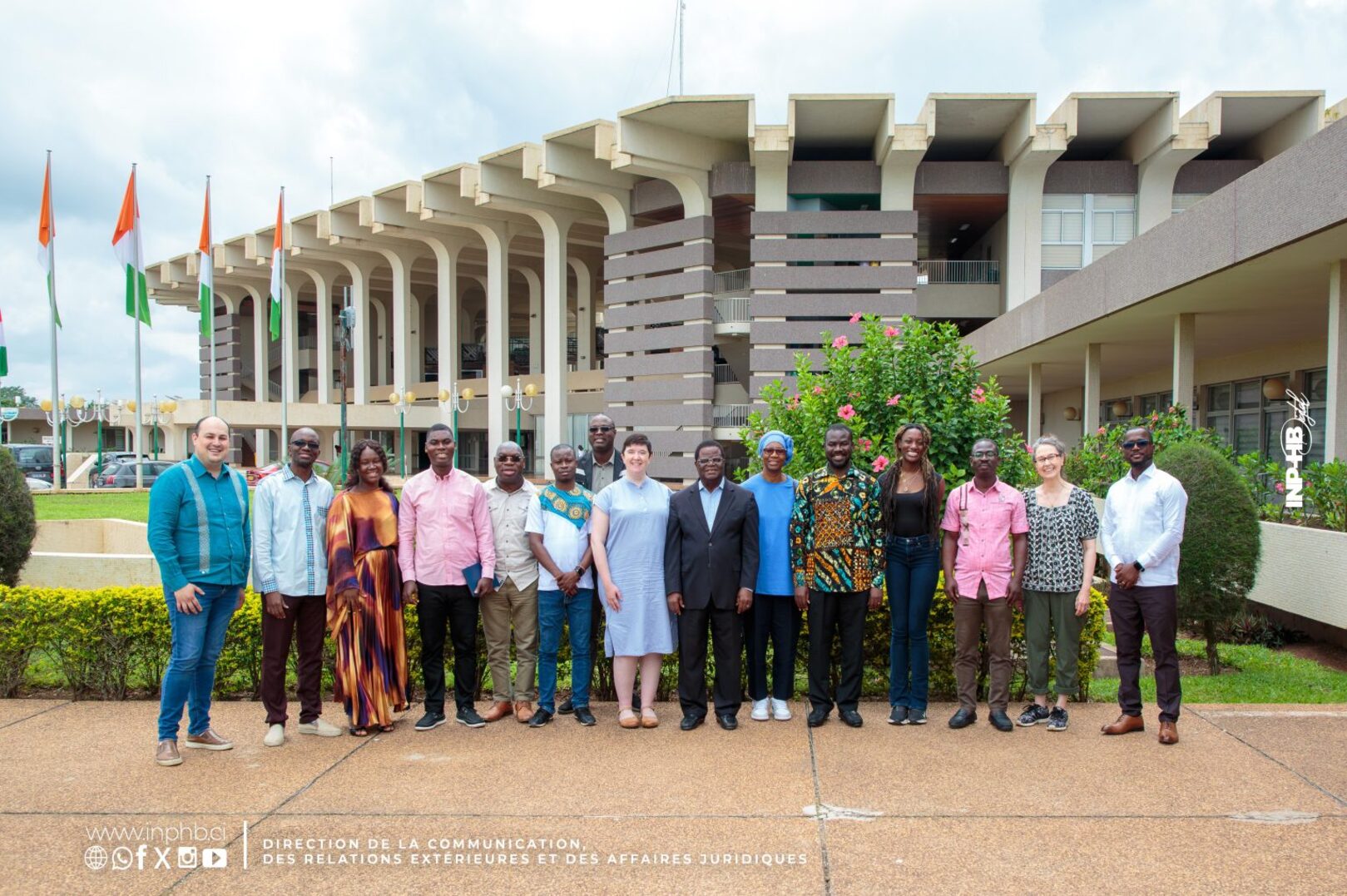
On Thursday, June 18, 2026, the National Polytechnic Institute Félix HOUPHOUËT-BOIGNY (INP-HB) welcomed a delegation from the prestigious Harvard University, with the aim of establishing an academic and scientific collaboration between the two institutions.
Led by Dr. Carla Denny Martin, head of the delegation, the visit is part of a research grant awarded by Harvard’s Motsepe Presidential Research Accelerator Fund for Africa to an international research team. The project, titled “Towards a Cocoa Producer-Focused Climate Policy in Côte d’Ivoire and Ghana”, focuses on the impact of climate change on cocoa farmers in Côte d’Ivoire and Ghana.
On behalf of the Director General of the Institute, Professor Pierre Yourougou welcomed this opportunity for INP-HB to strengthen its ties with North American institutions, particularly Harvard University. He highlighted the key role played by Dr. Jean-Luc Kouassi, a lecturer-researcher at the School of Agronomy (ESA) and local coordinator of the visit, serving as Co-Investigator in Côte d’Ivoire. His commitment has positioned the Institute at the center of regional scientific discussions on agroforestry in West Africa.
For her part, Dr. Carla Denny Martin expressed her gratitude for the warm reception given to her delegation, mentioning the upcoming establishment of a memorandum of understanding with the Cocoa Research Institute of Côte d’Ivoire (ICCR).
Presenting the project framework, Dr. Jean-Luc Kouassi explained that the central issue is the human dimension specifically the impact of climate change on cocoa producers, their livelihoods, health, and households. Conducted among farmers, community leaders, and influential stakeholders, the study has documented the daily realities of the cocoa sector.
The findings are clear: price increases alone are not sufficient to meet farmers’ needs. Researchers are therefore advocating for public policies focused on the health, well-being, and resilience of producers, as well as climate-smart water resource management and a paradigm shift that truly places farmers at the center of agricultural policy.
The discussions helped identify several priorities: refocusing all initiatives on the producer, whose productivity drives the entire value chain; ensuring that farmers are not disadvantaged within the chain; and systematically integrating their perceptions into project design. This study ultimately aims to reposition farmers at the heart of decision-making systems, reducing information gaps for faster and more effective action.