

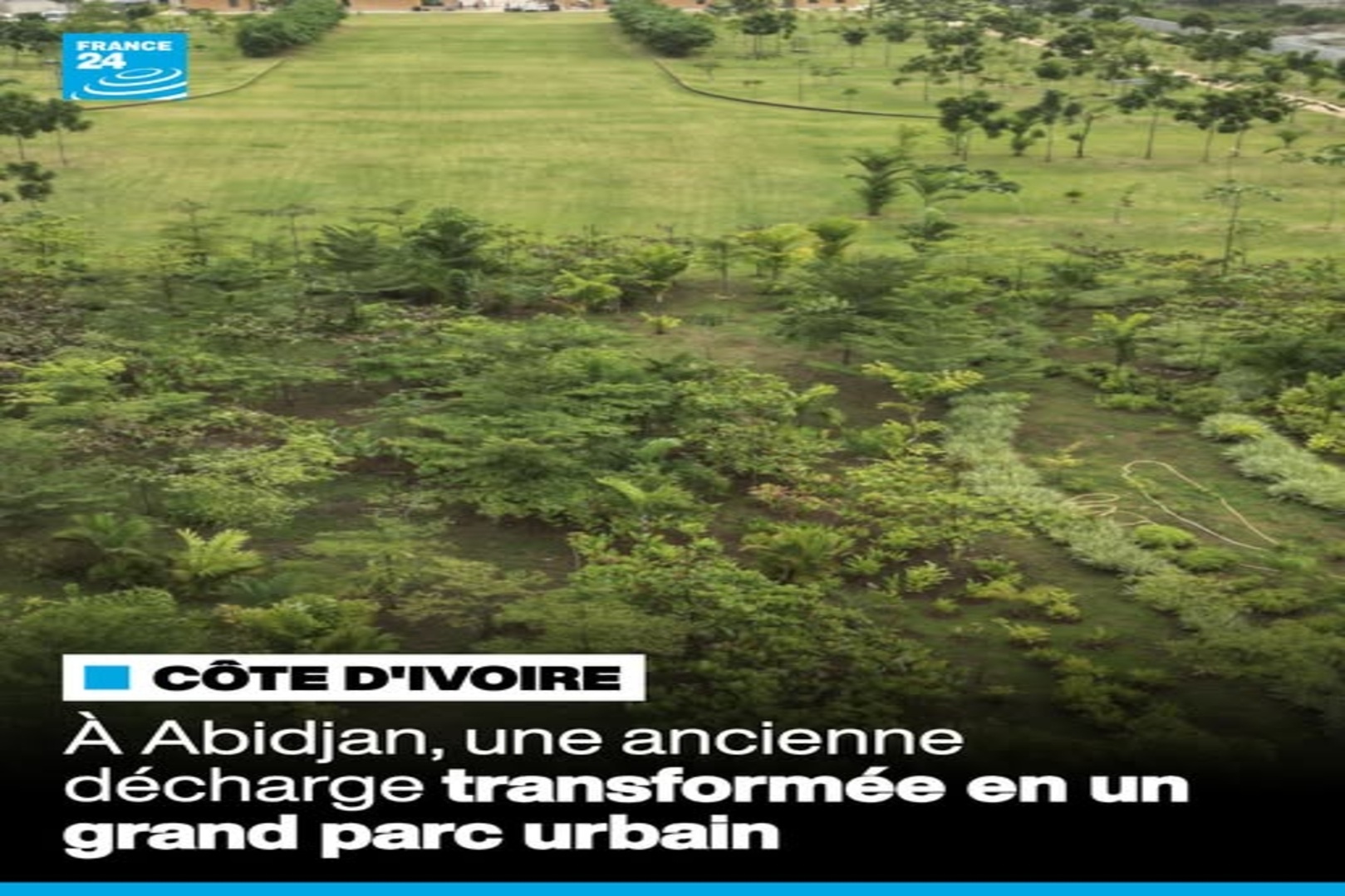
After closing in 2018, the Akouédo landfill in Ivory Coast’s economic capital has been transformed into a large urban park spanning over a hundred hectares, following several years of redevelopment. However, the official opening date is yet to be announced.
The Akouédo Park features brand-new infrastructure, fresh grass... and millions of tons of waste buried beneath — waste that, for decades, severely impacted the lives and health of residents in this eastern district of Abidjan, Côte d’Ivoire.
Opened in 1965, the Akouédo landfill was shut down in 2018 to make way for a major green space — a rare sight in Abidjan, a rapidly growing city of 6 million people. After five years of redevelopment, the park is now ready to open its doors, although an official inauguration date has not been set.
This dramatic change is a welcome relief for Akouédo residents, where the landfill — which once hosted toxic and hazardous waste — caused major health, environmental, and security issues.
“We suffered a lot,” said Célestine Maïlé, who has lived in Akouédo for over 30 years. Today, “it feels good to breathe,” she said emotionally, as she discovered the site’s new look. “There used to be mountains of garbage, and water would seep from underneath,” she recalled.
In addition to bad odors and pests, the landfill was considered “a major public health concern,” according to a 2019 study by Ivorian scientists on the toxicological risks of living near such waste.
The study recommended an urgent “closure and rehabilitation” of the site, warning that surrounding populations were “clearly exposed to toxic pollutants” such as lead, mercury, and carcinogenic chromium.
Exposure to this pollution also increased diseases like malaria, gastroenteritis, and respiratory illnesses, the researchers noted.
“The garbage brought sickness,” confirmed Célestine Maïlé, who suffers from eye problems after decades of living near the landfill. According to her, Akouédo had also become “a hangout for drug users,” where assaults were common.
“What was lost has been more than recovered”
“That dump was like living in a cemetery,” said Séverin Alobo, chief of staff for the Akouédo village leadership.
For the traditional authority, the park’s creation is a form of reparation for the community.
“Akouédo’s name will no longer be associated with a landfill but with a beautiful urban park,” celebrated Bouaké Fofana, Ivorian Minister of Hydraulics, Sanitation, and Cleanliness.
“What was lost has been more than recovered,” he assured, adding that 750 direct and indirect jobs were created through the project. The initiative also includes a market, a secondary school, and the renovation of two kilometers of roads in the area.
Funded by the Ivorian government at 124 billion CFA francs (about €189 million), the project includes a strong environmental component. Waste buried beneath the park is now being converted into energy resources through a collection and drainage system.
The biogas and leachate from the fermentation of the 53 million tons of waste are transported to a plant that will convert them into electricity — powering the park and even feeding into the national grid.
The park also includes an “Environmental House” designed to host events focused on contemporary environmental issues.
Visitors will enjoy recreational and sports areas, including a tennis court, two football fields, a large walkway winding through a growing tropical forest, and shared gardens.
Once the city’s only waste disposal site, Akouédo has now been replaced by a new landfill center in Kossihouen, on the outskirts of Abidjan, with four times the storage cap
France 24