

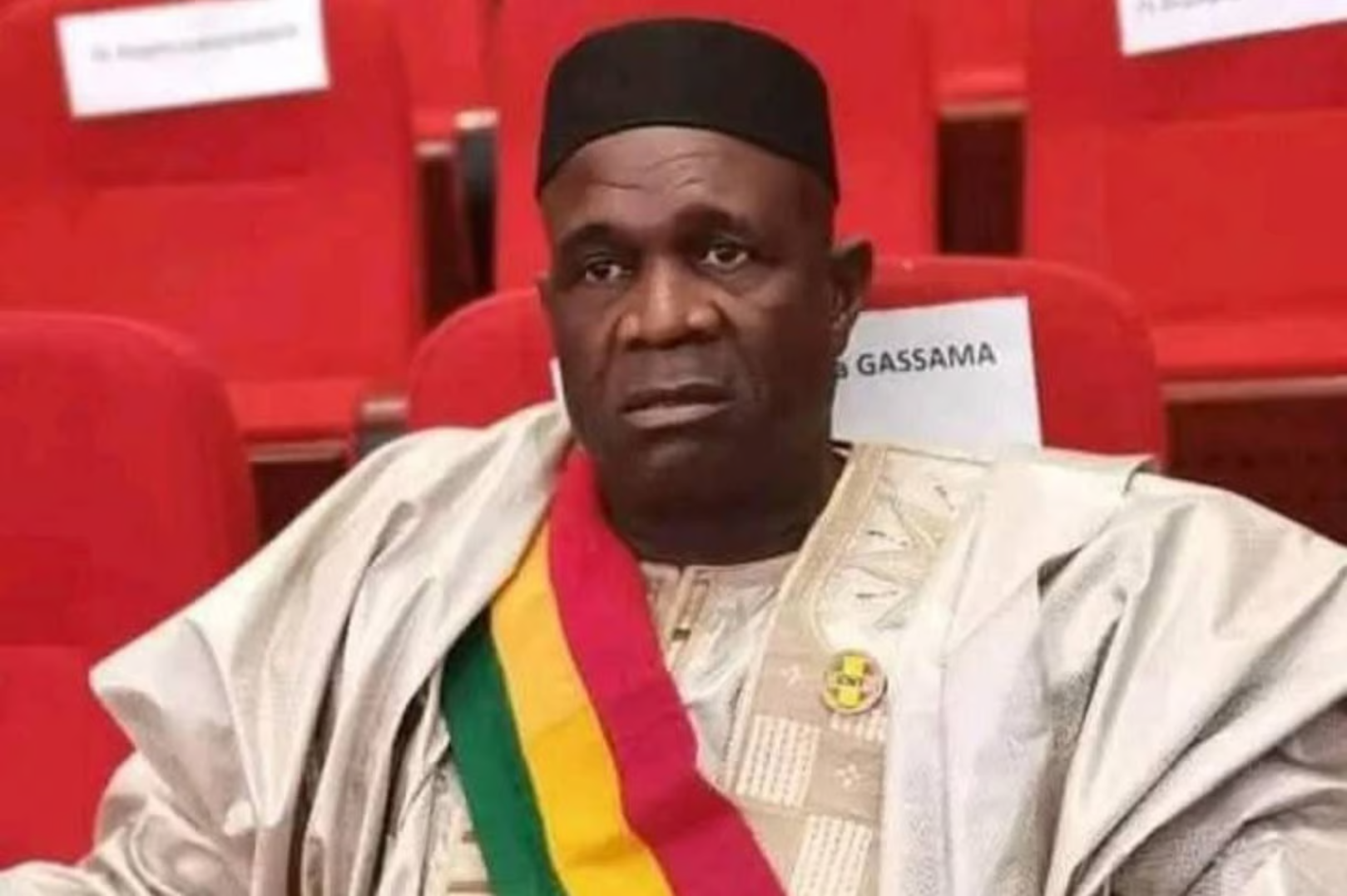
A court in Abidjan has sentenced Malian politician Mamadou Hawa Gassama to three years in prison for insulting Ivorian President Alassane Ouattara and making statements deemed offensive and outrageous, judicial officials confirmed on January 30, 2026.
Gassama, who served as a member of Mali’s National Transitional Council (CNT), was convicted by the Abidjan‑Plateau Court of First Instance after being charged with “offense against the head of state” and “distribution of offensive expressions online” in connection with comments he made about President Ouattara that were widely circulated on social media.
The charges stem from remarks made in a 2022 interview in which Gassama described President Ouattara as an “enemy of Mali” and questioned aspects of his leadership. The comments were interpreted by Ivorian authorities as harmful to the reputation of the head of state and the institutions of Côte d’Ivoire.
In addition to the prison sentence, the court also imposed a fine of five million CFA francs (approximately 7,600 euros) and ordered that Gassama be barred from entering Côte d’Ivoire for three years after serving his sentence.
Gassama was arrested in July 2025 while on a visit to Côte d’Ivoire and has remained in custody pending trial. Prosecutors had initially sought a five‑year prison term, but the judge opted for a reduced sentence.
Speaking after the verdict, Gassama’s lawyer, Mamadou Ismaïla Konaté, described the ruling as “excessive and severe,” noting that his client had already spent several months in detention and had expressed regret for his remarks during the proceedings. The defense has indicated that it may pursue an appeal.
The case has drawn international attention as an example of the tensions between freedom of expression and laws protecting the dignity of public office in West Africa. Observers also note that the episode is set against a backdrop of sometimes strained diplomatic relations between Mali and Côte d’Ivoire in recent years.
As of late January 2026, there has been no official statement from the governments of Mali or Côte d’Ivoire regarding the broader diplomatic implications of the court decision.