

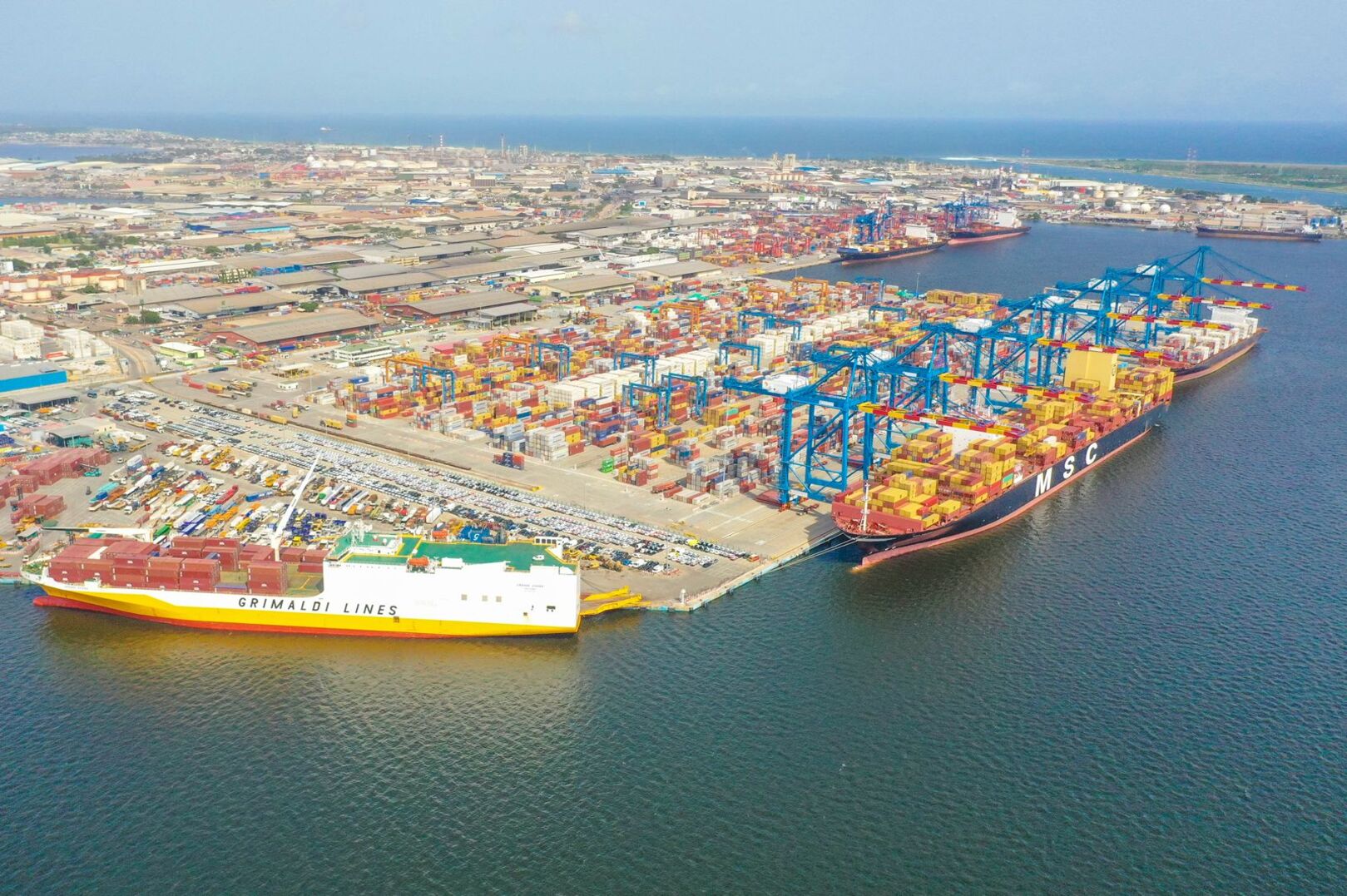
In 2025, the Port of Abidjan confirmed its status as a key logistics hub in West Africa. With an overall growth of 16.1%, the Abidjan port platform reached a new milestone, further strengthening its regional leadership.
According to recorded data, total traffic reached 46.6 million tonnes in 2025, up from 40.1 million tonnes in 2024. This significant increase reflects the confidence of economic operators, the enhanced competitiveness of the port infrastructure, and the strength of the Ivorian economy.
A key driver of national economic performance
Domestic traffic remains the main driver of this growth, rising from 28.55 million tonnes in 2024 to 34.2 million tonnes in 2025, a 19.8% increase. This performance confirms the Port of Abidjan’s strategic role as the primary gateway for Côte d’Ivoire’s trade. All sectors—including industry, commerce, and energy—benefit directly from the modernization of the port platform.
Strong and ambitious container traffic
Container traffic continues to grow, with 1,697,131 TEUs handled in 2025 compared to 1,646,304 TEUs in 2024, a 3.1% increase. For the second consecutive year, the Port of Abidjan has surpassed the one million container threshold, consolidating its position as one of the most dynamic ports in West Africa. The goal is now to reach 2 million TEUs by 2027 and secure a place among the world’s top 100 container ports.
Transit to Mali and Burkina Faso shows strong recovery
The Port of Abidjan also maintains its role as a strategic corridor for landlocked countries. Transit traffic reached 3.91 million tonnes in 2025, up 34.1%. Despite past socio-political tensions, commercial relations with hinterland countries remain strong, reflected in a vigorous recovery of flows and reinforced regional trade.
In Burkina Faso, traffic rose from 2,214,648 tonnes in 2023 to 2,400,111 tonnes in 2025, a 16.6% increase, demonstrating the corridor’s growing preference among Burkinabé operators. In Mali, traffic jumped from 835,216 tonnes in 2024 to 1.47 million tonnes in 2025, an exceptional 76.4% growth, reflecting the continued confidence of Malian operators and the Port of Abidjan’s central role in supplying the Malian economy.
Managed adjustment in transshipment
In a context of strong regional competition, transshipment traffic fell slightly by 1.9%, from 8.63 to 8.46 million tonnes in 2025, mainly due to congestion, insufficient access roads, and limited land reserves.
A modernized port, looking to the future
Since 2012, over 1,000 billion CFA francs have been invested in modernizing port infrastructure. These investments have transformed the platform, increasing capacity, improving productivity, securing operations, and aligning with international standards. Today, the Port of Abidjan offers world-class infrastructure and a strengthened strategic position on Africa’s Atlantic coast. A new investment cycle, currently under study, will consolidate this trajectory and support sustainable trade growth in the coming decades.