

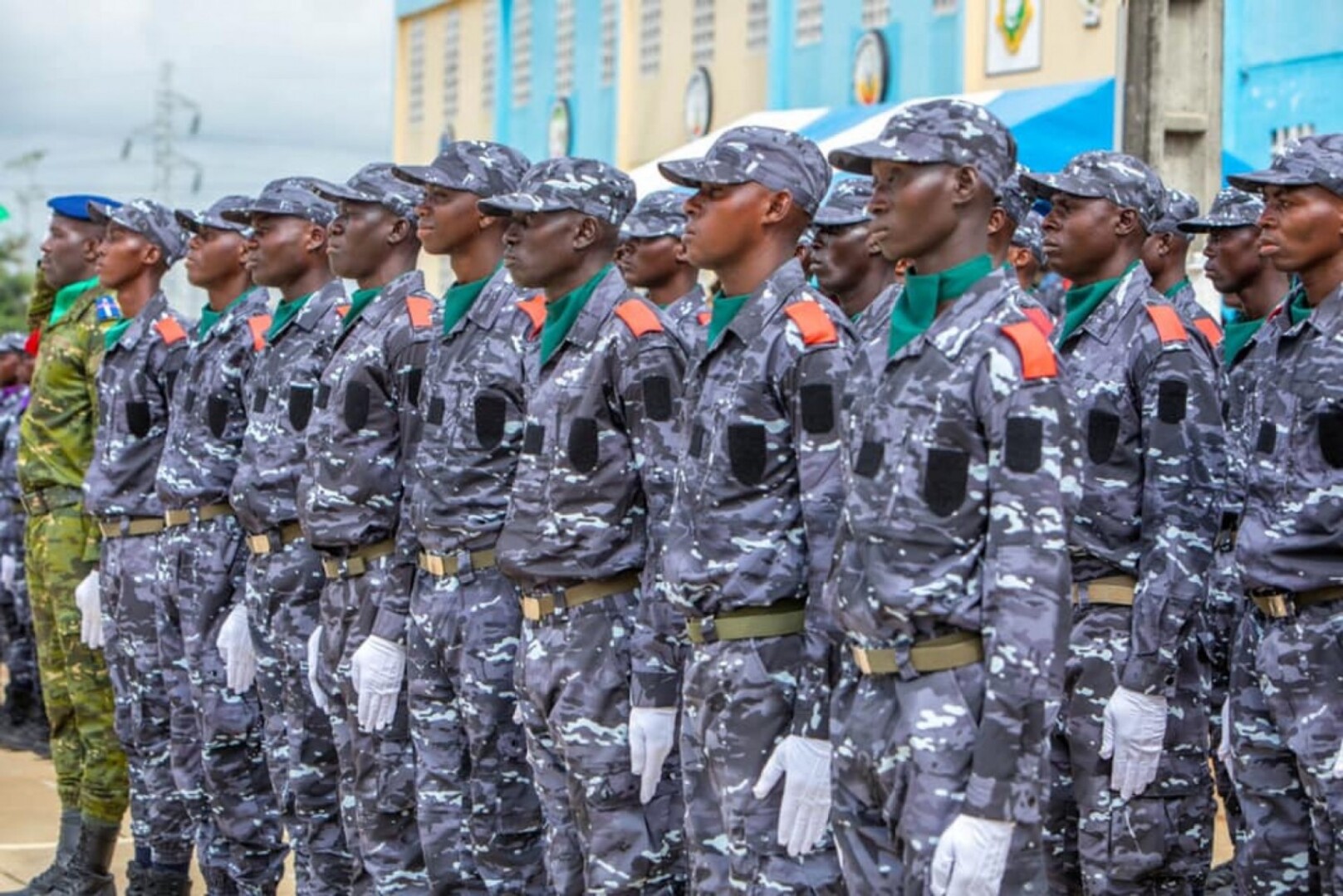
Since December 1, the security mechanism has been in place. As every year, the government has mobilized the Defense and Security Forces to allow populations to enjoy the end-of-year festivities in a safe and peaceful environment.
A total of 263 seizures, including 155 vehicles and 108 two- and three-wheeled vehicles for various offenses, as well as 332 systematic tests carried out as part of the fight against drunk driving. This was the midday report following the launch of the operation “Epervier on Our Roads 2025” on December 1. Since then, the operation has continued in order to secure travel during the end-of-year holiday period. Personnel deployed under this system are clearly visible on major roads and strategic routes.
Supported by the Ministry of Transport, the operation focuses on checking vehicle roadworthiness certificates, auto insurance, license plates, window condition, stickers, and driving licenses, among others. As every year, its objective is to protect road users in a context of high mobility and increased traffic, both from inland regions to Abidjan and from Abidjan to cities in the interior of the country.
This year, the holiday season will also be marked by the holding of legislative elections. To ensure the smooth conduct of this electoral process, the National Security Council meeting of November 13, 2025, decided on the deployment of 44,000 Defense and Security Forces personnel across the entire national territory.
Accordingly, the security operation for the December 27, 2025 legislative elections, named “Citizen Dome”, was officially presented on Thursday, November 27. It includes 18,000 police officers, 18,000 gendarmes, and 8,000 soldiers. These forces will be deployed from December 14, 2025 to January 4, 2026, to secure polling stations and sensitive sites, as well as to carry out continuous patrols.
This particularly lively festive period therefore receives special attention from senior security commands. The success of the operations deployed relies on coherence and coordination among the various forces engaged in the field. The State has undertaken numerous projects and made significant investments to expand security coverage and deploy surveillance technologies.
In terms of security, the 2011–2025 government report highlights the opening of 35 police stations, seven police districts, 11 Border Police Posts (PPF), five regional branches of the General Intelligence Directorate (DRG), the creation of 11 Regional Criminal Investigation Services (SRPJ), 10 Mobile Intervention Units (GMI), six Republican Security Companies (CRS), the Police Research and Assault Force (FRAP), the Mounted Brigade, and the deployment of the Police Recourse Unit across all 12 police prefectures.
Additional actions were also carried out to strengthen the security system. These included the coverage of the 12 police prefectures and strategic cities through the Urban Video Protection (VPU) system, the interconnection of 105 processing sites installed in judicial services and investigation units as part of the implementation of the West African Police Information System (WAPIS), the implementation of Phase 3 of the project for the acquisition of software and technological tools to combat terrorism, and the creation of the Platform for the Fight Against Cybercrime (PLCC).
In Côte d’Ivoire, the improvement of logistical resources and intervention capacities has led to a significant evolution of the security index, which stands at 1.2 in 2025, compared to 6.8 in 2011.
This year, as in previous years, senior security commands have taken all necessary measures to ensure that populations enjoy the end-of-year festivities in peace and tranquility, and that Côte d’Ivoire remains a haven of stability and security, where peace continues to be a tangible reality.