

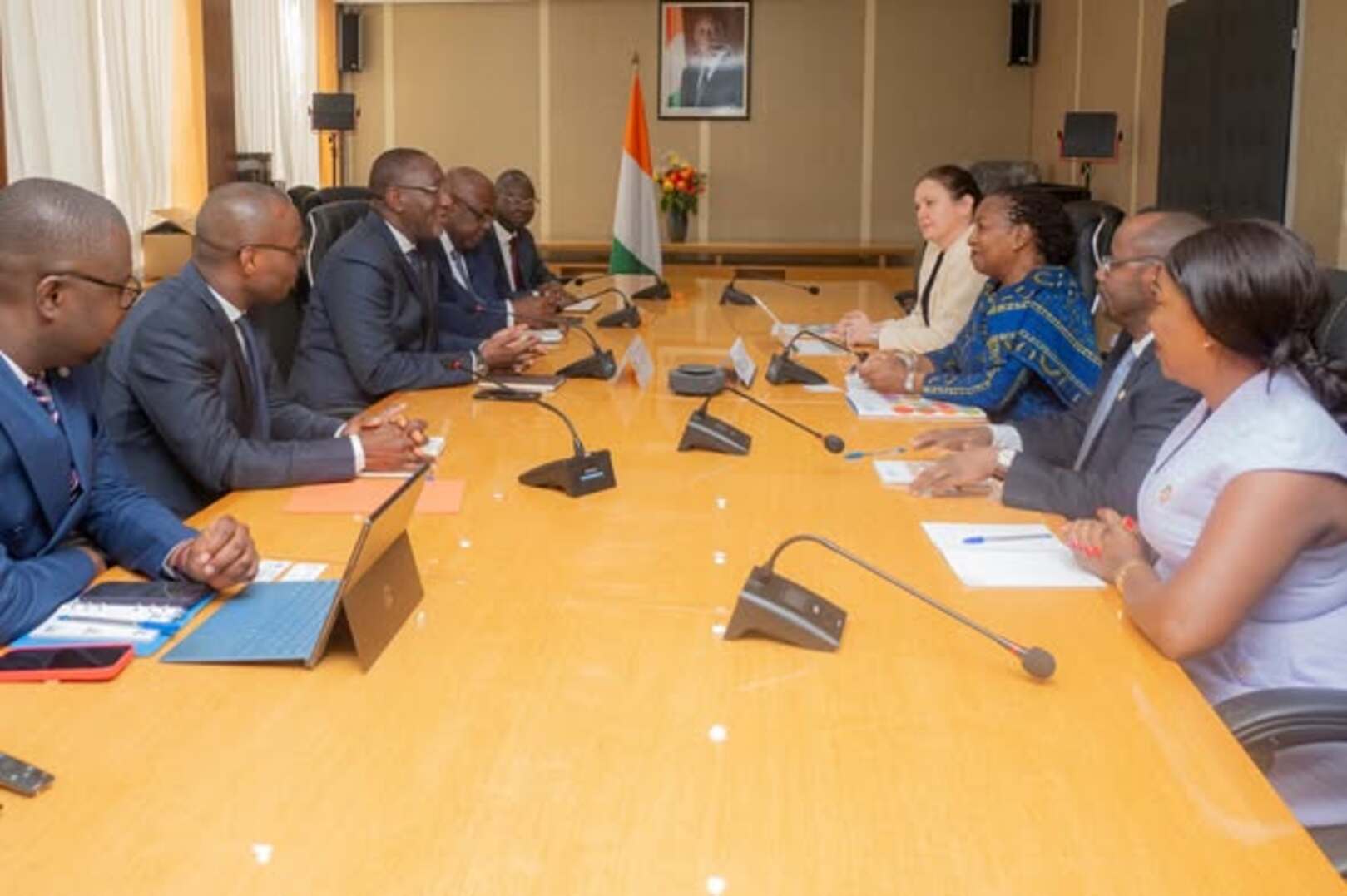
As the country shapes its next national development strategy, cooperation between the United Nations System in Côte d’Ivoire and Ivorian authorities is entering a new phase. Under the leadership of Hélène N’Garnim‑Ganga, appointed in November 2024 as the UN Resident Coordinator for development in Côte d’Ivoire, multi-sector partnerships are being reinforced to support the implementation of the National Development Plan (PND) 2026‑2030 and the achievement of the Sustainable Development Goals (SDGs) by 2030.
With over thirty years of experience in international development, Ms. N’Garnim‑Ganga coordinates the collective work of the UN’s 21 agencies, funds, and programs in the country. Her primary role is to facilitate an integrated, coherent response aligned with national development priorities.
A key focus of this cooperation is alignment between the UN’s strategic framework and Côte d’Ivoire’s upcoming National Development Plan. As the country finalizes its five-year development plan, the UN System commits to providing technical expertise and supporting the assessment of previous cooperation frameworks to maximize impact.
An official workshop organized by the Ministry of Economy, Planning and Development in January 2025 illustrated this dynamic. Bringing together the World Food Programme (WFP), national authorities, and development partners, the workshop aimed to evaluate the 2019‑2025 Country Strategic Plan and initiate the formulation of the new 2026‑2030 strategy. Ms. N’Garnim‑Ganga emphasized that these efforts are part of preparing the UN Sustainable Development Cooperation Framework (UNSDCF) 2026‑2030, fully aligned with the PND.
Beyond strategic planning, cooperation materializes in concrete initiatives on the ground, including:
-
Transition to sustainable and inclusive development, with over 100 projects targeting vulnerable areas of the country. In its 2024 annual report, the UN System reported mobilizing nearly 90 billion CFA francs to support these programs, covering socio-economic, community, and environmental sectors.
-
Engaging the private sector around the SDGs. Through the UN Global Compact, Ivorian companies commit to integrating international sustainability standards into their practices, enhancing the collective impact of development actions. (cotedivoire.un.org)
-
Energy transition and climate action, where coordination between UN agencies, the government, and partners supports a just, inclusive, and transformative energy strategy.
For both the Ivorian government and the United Nations, this cooperation is more than technical assistance. It represents a shared vision where national development relies on strong partnerships between public institutions, technical and financial partners, civil society, and the private sector. This framework aims to strengthen national institutional capacities, mobilize resources, and ensure policies are effective, inclusive, and sustainable in the long term.
As Côte d’Ivoire prepares to implement its PND 2026‑2030, cooperation with the UN System stands out as a key pillar, translating national ambitions into tangible results for the population, particularly in reducing inequalities, fostering sustainable economic growth, and building resilience against social and environmental challenges.