

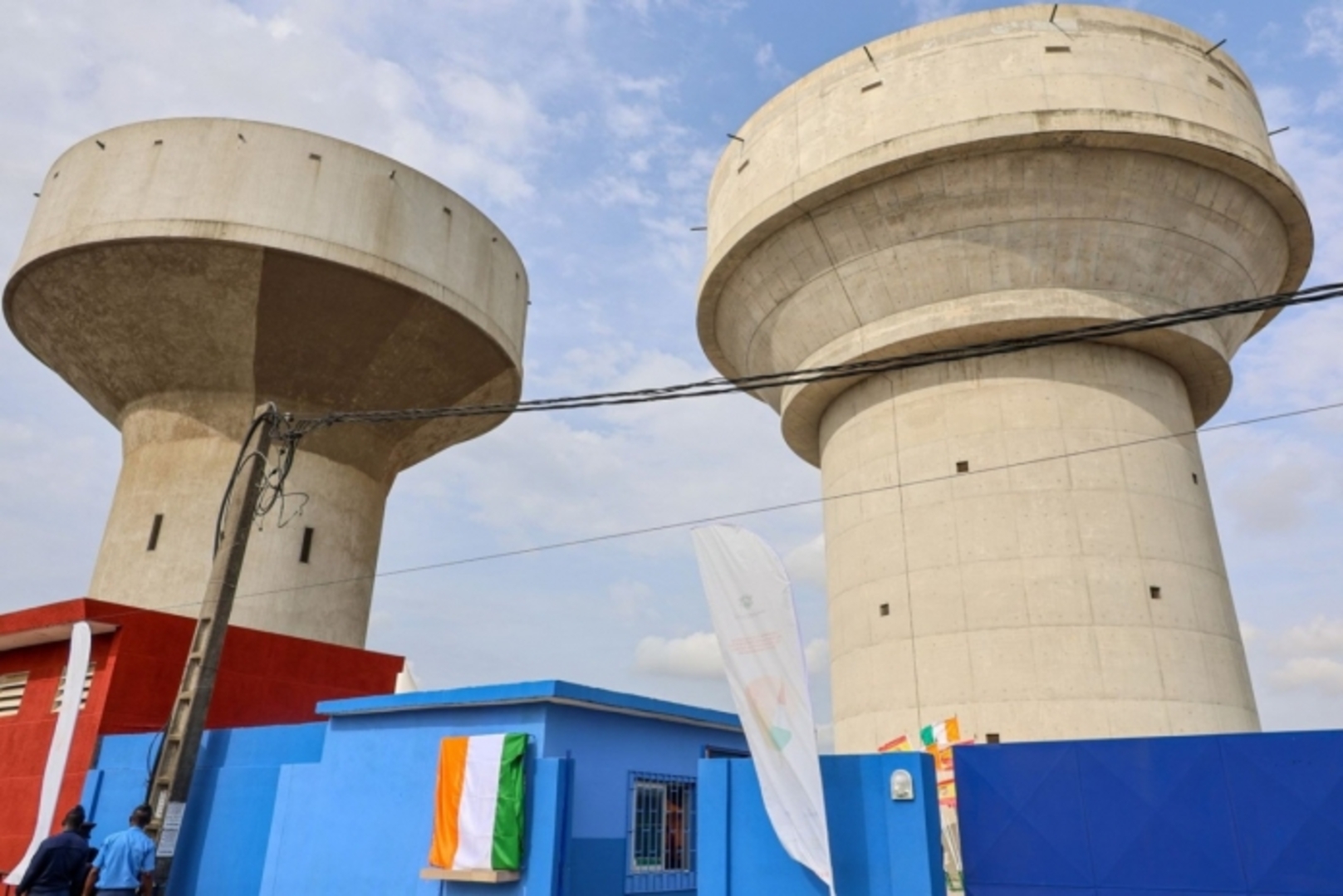
Numerous projects have been implemented across the country to provide regions with structuring infrastructure aimed at sustainably addressing access to drinking water and electricity. While significant progress has been made, the country, which is targeting universal access to these essential services, is now entering the final stretch toward full coverage.
“In order to achieve our objective of nationwide coverage in water and electricity, we will, before the end of March 2026, identify localities that are not yet covered, as well as expansion needs, in order to plan the remaining efforts required,” President of the Republic Alassane Ouattara stated in his Address to the Nation on December 31, 2025.
This announcement is in line with the government’s commitments to improving access to drinking water and electricity.
Major Progress in Electrification
Significant progress has been achieved in the electrification of many localities across the country. Thousands of villages have been brought out of darkness, confirming the government’s commitment to making universal access to electricity a reality.
“Dabakala has 224 villages. Only 15 had electricity in 2011. Today, only two villages remain to be electrified,” proudly announced the President of the Hambol Regional Council, Kalil Konaté, during the inauguration of the Kotolo radio-electrical site on January 25, 2025.
According to the government’s 2011–2025 report, 95.67% of localities were electrified as of June 2025, compared to 33.1% in 2011.
The country currently has an installed electricity generation capacity of 3,019 MW, up from 1,391 MW in 2011, representing an increase of 117%. This capacity includes 1,998 MW of thermal power (66%), 991 MW of hydropower (33%), and 30 MW of solar energy (1%).
Côte d’Ivoire also has 7,700 km of high-voltage transmission lines, compared to 4,478 km in 2011, an increase of 71.95%. The electricity distribution network now covers 67,089 km (34,656 km in medium voltage and 32,433 km in low voltage), up from 36,101 km in 2011, reflecting an increase of 85.83%. The number of power substations (225/90 kV) has risen from 45 in 2011 to 74 in 2025, an increase of 64.44%. In total, 8,690 localities were electrified in 2025, compared to 2,851 in 2011, marking a 204.80% increase.
These figures led the Minister of Mines, Petroleum and Energy, Mamadou Sangafowa-Coulibaly, to state during the government press briefing “Les Rendez-vous du Gouvernement” on June 6, 2024, that “the electricity sector is undeniably the sector in which our country has made the most significant progress over the past decade.”
Strengthening Access to Drinking Water
In the water sector, the government launched the large-scale “Water for All” program in 2012, with a budget of 1,320 billion CFA francs, aimed at generalizing access to drinking water. The country has also implemented a strategy to achieve Sustainable Development Goal 6 (SDG 6) and launched a 2025–2030 operational plan valued at over 3,700 billion CFA francs.
In inland regions, the government has invested 654 billion CFA francs to improve drinking water production and distribution in more than 500 localities.
In Dondi, located 30 kilometers from Oumé, for example, the construction of a new water tower has put an end to water shortages. A pipeline network of more than 13 kilometers now supplies several neighboring villages in the Tonla sub-prefecture.
Since February 2020, the Aropka water tower has been supplying drinking water to the populations of Aropka, Kadropka, and Lipoyo, localities situated 25 kilometers from Sassandra. Previously, women were forced to fetch water using canoes.
In rural areas, more than 21,000 hand-operated water pumps have been rehabilitated nationwide at a cost of approximately 17.7 billion CFA francs. In addition, more than 300 localities have been equipped with improved village water supply systems and hand pumps through joint financing arrangements.
Thus, “In our cities and villages alike, drinking water and electricity continue to expand. They are no longer privileges, but rights that we strengthen every day,” the Head of State declared in his Address to the Nation on August 6, 2025.