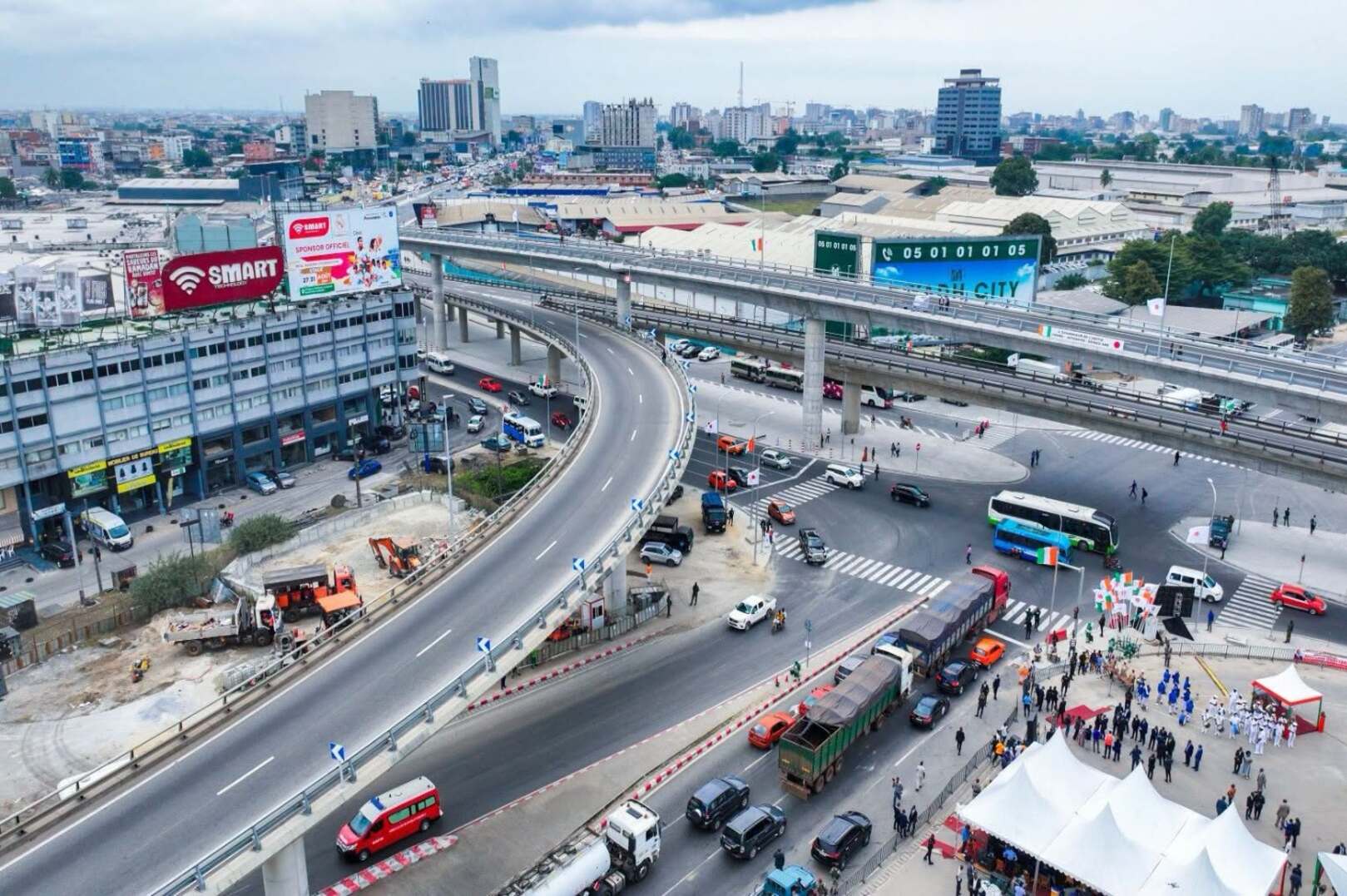
Côte d’Ivoire plans to expand its road network by adding 3,000 km of paved roads and 300 km of highways by 2030, as the government steps up investment in transport infrastructure.
Infrastructure and Road Maintenance Minister Yacouba Hien Sié announced the targets on Thursday, November 12, during an online government programme, Gouv’Talk, in Abidjan.
The country currently has about 83,000 km of classified roads, including 9,000 km of paved roads and 400 km of highways. The planned expansion would bring the total to 12,000 km of paved interurban roads and 700 km of highways.
In Abidjan, the government is also pursuing major transport projects to ease traffic congestion. These include the metro line linking Anyama to Port-Bouët and the Bus Rapid Transit (BRT) system connecting Yopougon to Bingerville, both expected to be operational by the end of 2028.
The minister also announced plans for a bridge linking Abatta to Port-Bouët, as well as the development of lagoon transport between Songon and Bingerville.
In the aviation sector, the expansion of Félix Houphouët-Boigny International Airport is expected to increase its annual passenger-handling capacity to 8 million by 2030, from 2.4 million in 2025.
The government also plans to expand container terminals at the ports of Abidjan and San Pedro and strengthen the dry port of Ferkessédougou.
Railway projects include the rehabilitation of the Abidjan-Ouagadougou-Niamey line, estimated to cost nearly 300 billion CFA francs, and a proposed railway linking San Pedro to Odienné and Bamako. A high-speed rail line between Abidjan and Yamoussoukro is also planned.
These projects form part of Côte d’Ivoire's broader strategy to improve connectivity, facilitate trade and strengthen transport links across the country and the wider West African region.