

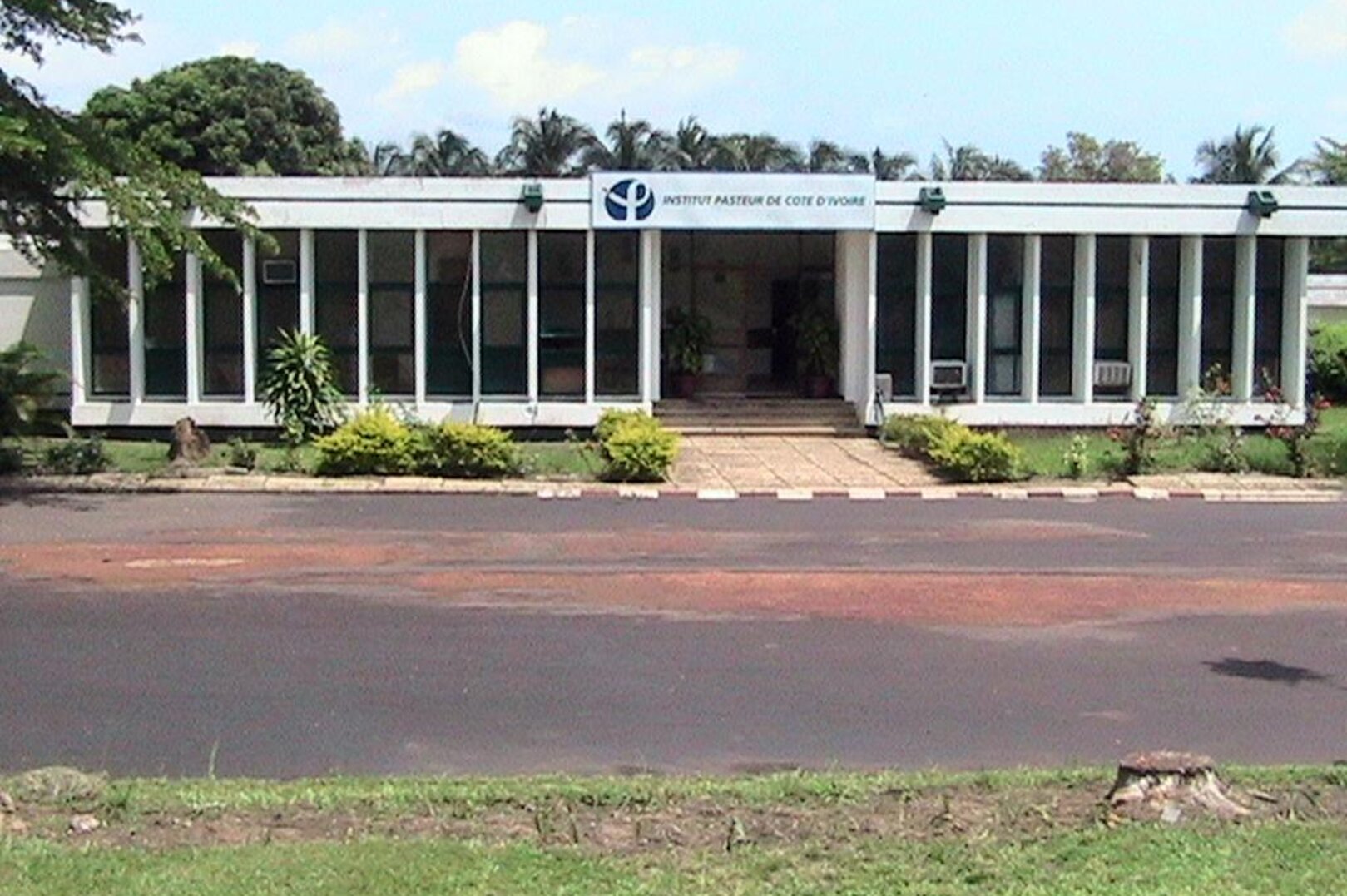
Institut Pasteur de Côte d'Ivoire (IPCI) is a national public industrial and commercial establishment (EPIC) created in 1972.
It reports to the Ministry of Higher Education and Scientific Research.
Since 1978, it has belonged to the international network of Instituts Pasteur (RIIP).
The mission of this scientific network, based on moral and ethical values, is scientific research in the service of human health.
Throughout the 19th and 20th centuries, yellow fever had a profound impact on the history of Côte d'Ivoire. These numerous epidemics led to the transfer of the capital from Grand Bassam to Bingerville in 1900.
In the wake of the numerous epidemics following independence, Côte d'Ivoire's first president, Félix Houphouët-Boigny, began designing a research center around these major epidemics. This work culminated in the inauguration of the IPCI in 1972. This center is essentially dedicated to the study of viral diseases affecting human populations, in particular rabies, yellow fever, enteroviruses and poliomyelitis2. IPCI became part of the International Network of Pasteur Institutes in 1978.
It became a reference institute, and in 2018, the biobank for the countries of the Economic Community of West African States, and plays an increasingly important role against epidemics, such as Ebola, Zika, dengue or yellow fever5, or in 2010 covid-19. The institute has been headed by Mireille Dosso since 2004.
Strategic vision
"The strategic vision of the Institut Pasteur de Côte d'Ivoire is that of a modern institution whose reputation is based on skills, action, creativity, respect for values and communication, promoting the concepts of technicality, interdisciplinarity, partnership, quality system and temporality in line with the problems of Ivorian society and contributing to their resolution.