Ivory Coast: A Heavy Food Import Bill
Each year, Ivory Coast spends over 3.8 billion US dollars on imported food products. This dependence raises questions about the country’s food sovereignty, particularly amid volatile global markets and increasingly frequent climate-related shocks.
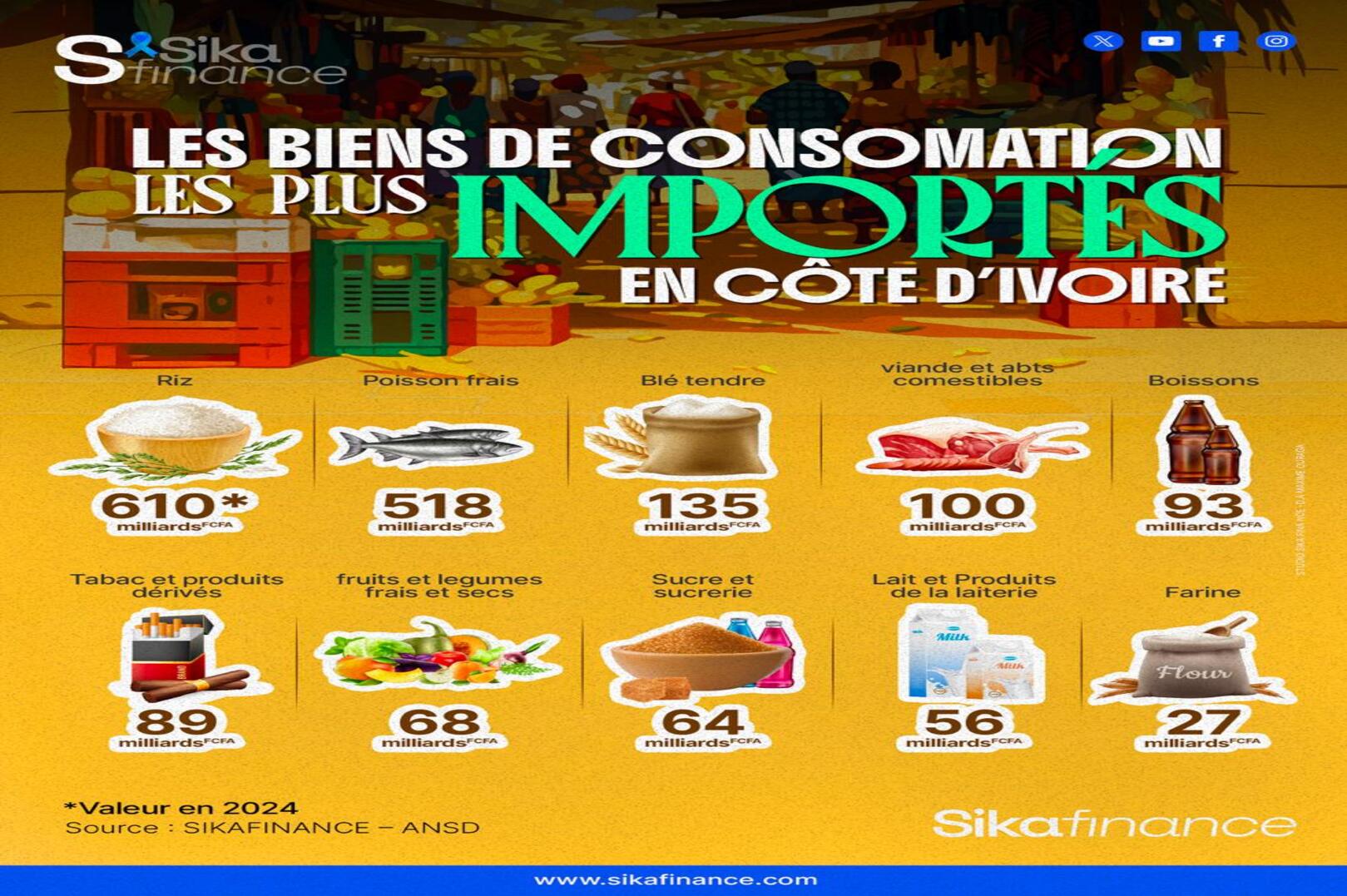
According to an infographic published by Sika Finance, the most imported products in 2024 were:
-
Rice: 610 billion CFA francs
-
Fresh fish: 518 billion CFA francs
-
Soft wheat, meat, beverages, tobacco, fruits and vegetables, sugar, milk, flour
These ten categories represent a significant share of Ivorian households’ daily consumption.
"Structural dependence exposes the country to major risks in the event of logistical crises or price surges on international markets," explains an economist in the agro-food sector.
Persistent Vulnerability
The heavy reliance on rice and fish, which together account for nearly 1,100 billion CFA francs, reveals weaknesses in local production. Despite efforts to revive agriculture, Ivory Coast struggles to achieve self-sufficiency for these basic staples.
The consequences are multiple:
-
Exposure to external shocks: conflicts, health crises, or climate events can disrupt supply.
-
Pressure on the trade balance: food imports widen the deficit.
-
Social vulnerability: rising food prices directly affect the most vulnerable populations.
Toward Food Sovereignty?
In response to this situation, several experts recommend restructuring local agricultural value chains, including:
-
Supporting rice and fish producers
-
Investing in agro-food processing
-
Diversifying import sources to reduce risk
The Ivorian government has launched several programs to strengthen food security, but results remain mixed. Food sovereignty remains a central issue in economic and political debates.
Sources: Sika Finance, ANSD

