Sub-Saharan Africa: Solid Growth but Deep Challenges for Employment and Per Capita Income
The economy of Sub-Saharan Africa is expected to experience increased growth over the next two years, according to the latest projections from the World Bank and other international organizations. However, this favorable trajectory masks persistent structural difficulties, particularly in terms of employment and improving living standards.
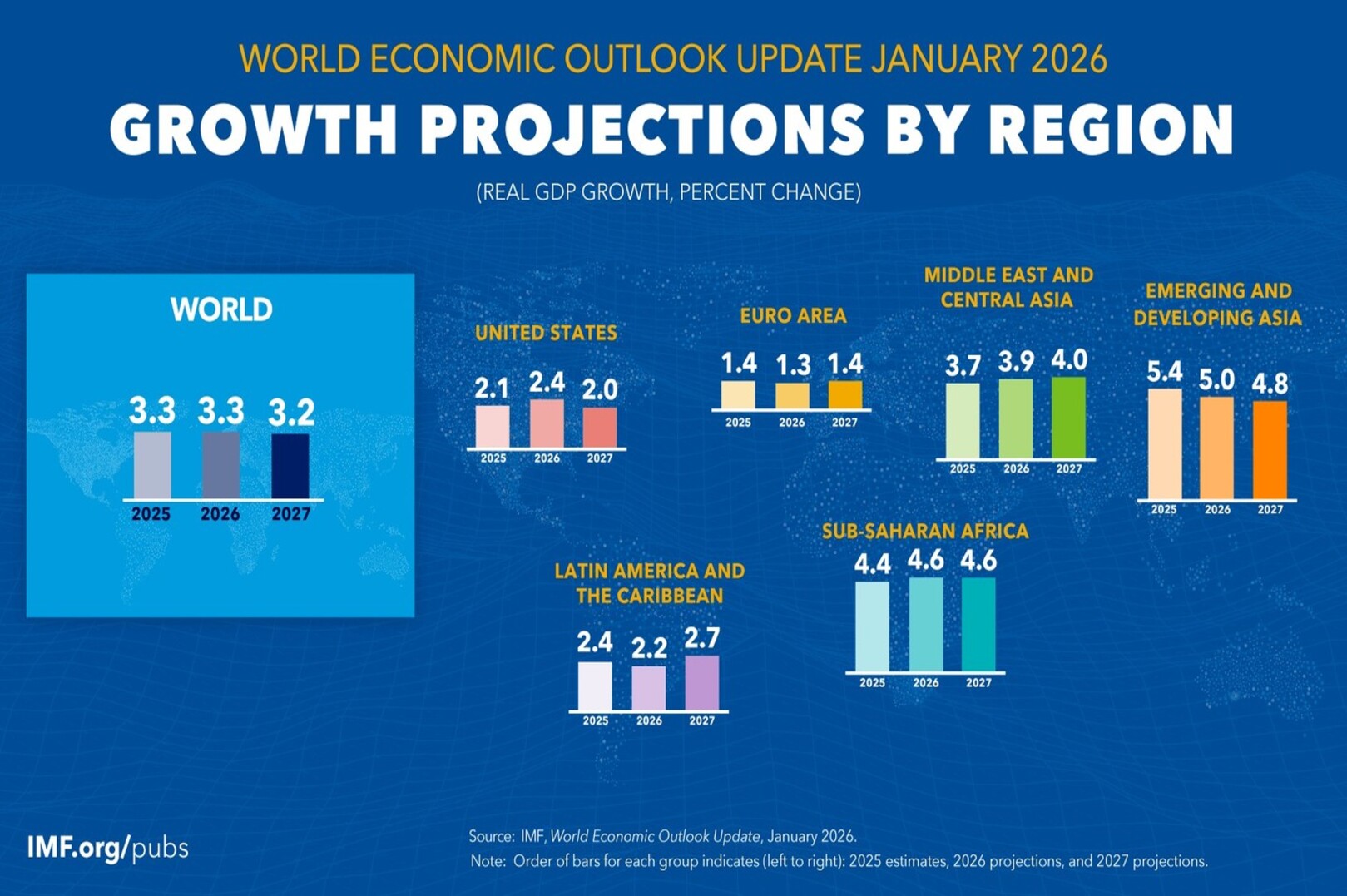
According to the most recent forecasts, economic growth in the region is expected to strengthen, with an estimated rate of 4.3% in 2026, potentially reaching 4.7% in 2027 if external conditions remain stable. This marks an improvement compared to previous years and is supported by a recovery in investment, stronger exports, and moderating inflation.
This momentum is shared by several economies in the region, some of which have particularly robust prospects. For example, smaller states such as Guinea and Rwanda could experience growth rates well above the regional average, based on analyses using World Bank projections.
For several large African economies, such as Nigeria, this renewed activity could represent one of the highest growth rates in a decade.
Despite overall growth, improvements in per capita income remain moderate. Projections indicate an average growth of around 2% per year for the period 2026‑2027.
While significant in absolute terms, this pace is insufficient to substantially improve the living standards of millions of people. In several countries in the region, per capita income has not yet returned to pre-COVID-19 levels, and some countries may see only marginal gains or even declines, according to earlier Global Economic Prospects data.
Experts emphasize that significantly reducing poverty and improving living conditions would require much higher per capita income growth. This is supported by IMF assessments, which suggest that growth of more than 7% is necessary to achieve structural transformations similar to those seen in Asia.
Rapid population growth is placing considerable pressure on labor markets. With a rapidly growing young population, the region needs to create millions of jobs each year just to absorb new entrants into the labor market.
However, a significant portion of the jobs created remain in the informal sector, characterized by low productivity and precarious working conditions. Numerous analyses show that only a fraction of young workers access formal, paid employment, limiting social and economic progress.
Even with strong economic growth, if it is not accompanied by a structural transformation of the labor market, the employment challenge will remain the main obstacle to social progress. International institutions stress the need to promote the creation of productive and decent jobs, through private investment, infrastructure development, and better training for young people.
Sub-Saharan Africa’s economic trajectory remains vulnerable to several external risks, including uncertainties related to international trade policies, reductions in official development assistance, geopolitical tensions, and tighter global financial conditions.
Moreover, some countries continue to face internal challenges such as insecurity, high budget deficits, and inadequate infrastructure, which hinder investment and economic integration.
Economic projections for Sub-Saharan Africa in 2026‑2027 present a mixed picture: stronger-than-expected growth driven by reforms and favorable global trends, but limited improvements in per capita income and a labor market struggling to absorb a growing young population.
National authorities and international partners agree on one point: without concerted efforts to stimulate employment, strengthen education and training, and attract quality investments, economic growth may not translate into tangible gains for the majority of citizens.