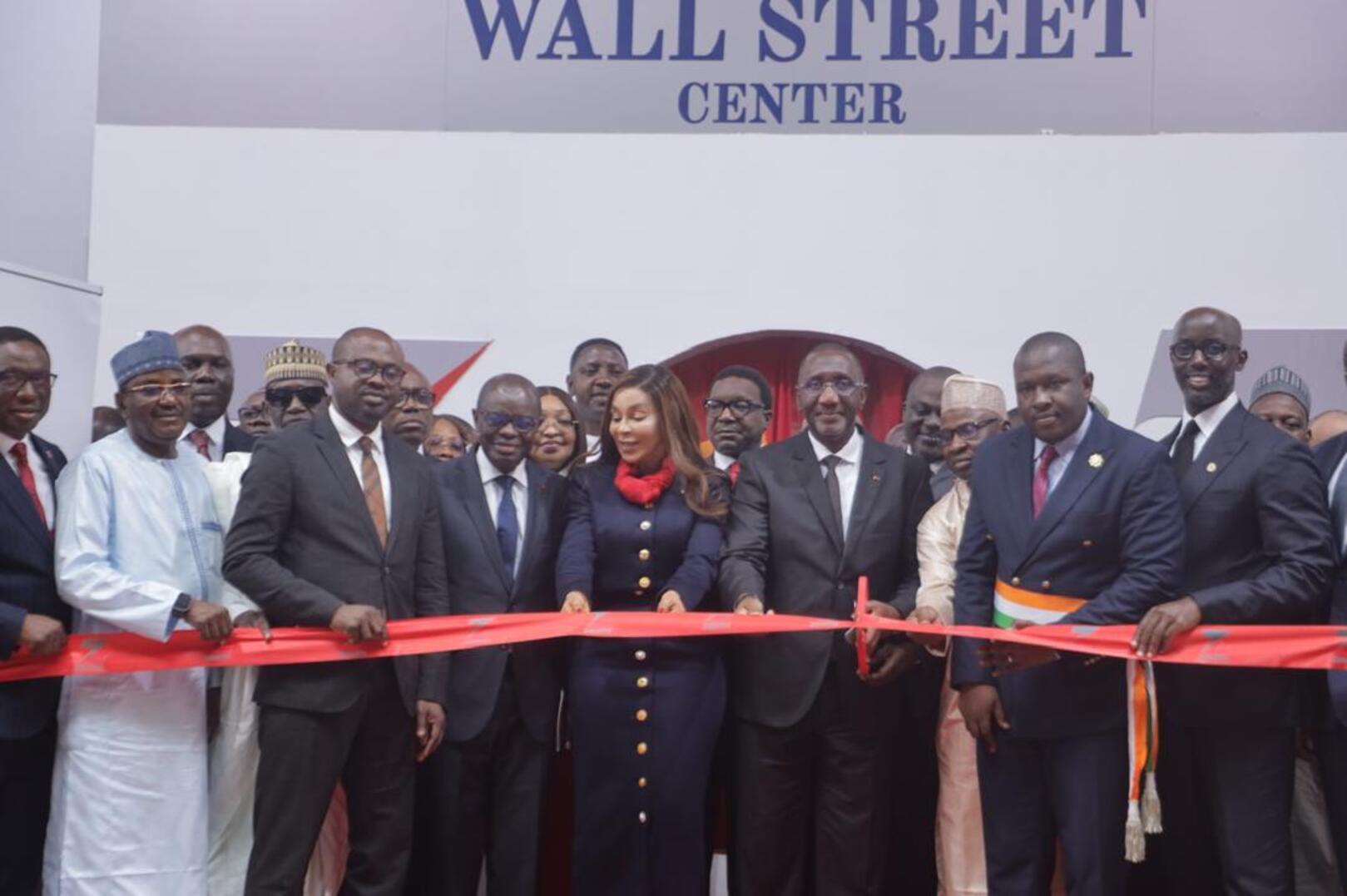
Zenith Bank Opens Headquarters in Abidjan, Strengthening Côte d’Ivoire–Nigeria Economic Integration
The Minister of Planning and Development, Souleymane Diarrassouba, presided over the inauguration ceremony of the headquarters of Zenith Bank Côte d’Ivoire, a subsidiary of Nigeria’s Zenith Bank, on Wednesday, April 29, 2026, in Abidjan. This new establishment strengthens economic integration between Côte d’Ivoire and Nigeria, whose trade exchanges reached $2.6 billion in 2025. The inauguration comes as the National Development Plan (2026–2030) prioritizes financing productive investment as a key driver of economic transformation.
The ceremony was attended by Adaora Umeoji, the Ivorian Ambassador to Nigeria, a representative of the President of Nigeria, the Vice-President of the National Assembly of Côte d’Ivoire, as well as representatives from the public administration and private sector.
Located in Le Plateau, the main business district of Abidjan, Zenith Bank Côte d’Ivoire focuses on corporate banking, structured finance, and supporting companies operating in strategic sectors such as energy, mining, and telecommunications. It becomes the third Nigerian banking institution to establish operations in the country, after Guaranty Trust Bank and United Bank for Africa.
“Trade between Côte d’Ivoire and Nigeria reached $2.6 billion in 2025, driven notably by crude oil imports. Financing must be directed toward sectors that sustainably drive growth. Energy, mining, and telecommunications generate productive investment and employment. The banking sector plays a decisive role in this direction. The Abidjan–Lagos corridor project will impact more than 300 million people across five ECOWAS countries: Côte d’Ivoire, Ghana, Togo, Benin, and Nigeria. This strategic infrastructure strengthens regional integration,” said Minister Souleymane Diarrassouba.
Strengthening the banking sector is a key lever in the savings–investment–growth cycle at the heart of the 2026–2030 National Development Plan, which aims to elevate Côte d’Ivoire to upper-middle-income status by 2030. The growing interest of regional financial institutions in the country reflects the strength of its macroeconomic framework, business climate, and investment opportunities.