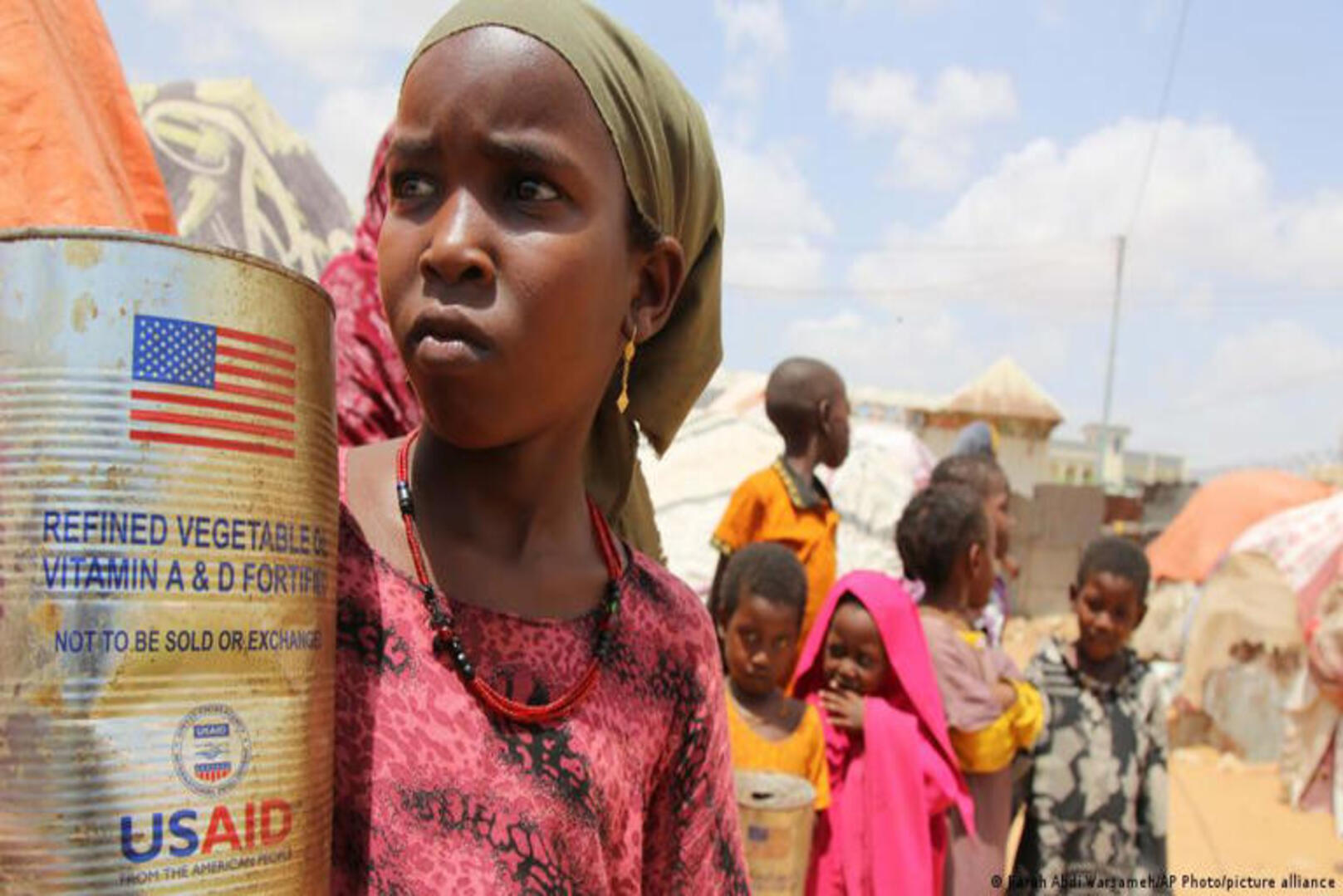
Donald Trump began his second term at the White House one year ago, on January 20, 2025, and his policies have already caused profound upheavals around the world. One of the most striking examples is undoubtedly the repercussions of the gradual dismantling of the United States Agency for International Development (USAID).
In Africa, the decline in U.S. funding is already being felt painfully. The continent was one of the main beneficiaries of American aid, and the withdrawal of this support has had a particularly severe humanitarian impact.
With the disappearance of USAID, a major pillar of international aid has collapsed. In 2024, the agency represented more than 35 billion dollars in assistance worldwide, including 11.5 billion dollars allocated to Africa—accounting for between 35% and 42% of recent global aid.
Collapse of Health Programs
The first major consequence of USAID’s withdrawal in Africa has been the collapse of health programs. Efforts to combat HIV/AIDS and tuberculosis were largely financed by the United States, and many clinics have been forced to close.
In South Africa, where 17% of the population aged 15 to 49 is living with HIV, access to antiretroviral treatment has dropped significantly. Programs targeting the most vulnerable populations have been halted. The Desmond Tutu Foundation estimates that up to 500,000 people could now die from HIV over the next decade as a result.
Reduced Vaccination Campaigns and Food Aid
The same situation applies to malaria and other infectious and viral diseases. Vaccination campaigns have been drastically reduced in the Democratic Republic of Congo, Mozambique, and Ghana, among others.
Food insecurity is also worsening. In Ethiopia, aid to one million people has stopped. In the DRC, the Sahel, Somalia, and South Sudan, several NGOs have been forced to suspend their programs.
Beyond health and food security, the abolition of USAID has also affected other sectors such as education—particularly in Senegal and Côte d’Ivoire—as well as human rights initiatives and democratization programs.
According to estimates, within just one year, the end of U.S. aid could push up to 5.7 million additional Africans into poverty. The Institute for Security Studies (ISS) warns that this number could rise to nearly 19 million by 2030.
A Blow to African Economies
In already fragile economies, sub-Saharan Africa’s GDP could lose up to 4.5 billion dollars over the next five years. In concrete terms, this would mean the dismissal of thousands of healthcare workers, the shutdown of water and sanitation projects, and the freezing of agricultural programs.
The impact is also being felt in Africa’s innovation ecosystem. In Kenya alone, the shortfall amounts to nearly 100 million dollars and could shrink the tech sector by 15% over the next three years.
Even more worrying, in the Alliance of Sahel States (AES), which could lose around 700 million dollars, and in several conflict zones such as the DRC, South Sudan, and Somalia, USAID supported stabilization programs, extremism prevention initiatives, and humanitarian assistance. The disappearance of these programs risks increasing insecurity and further weakening already fragile states.
Rethinking Partnerships
Shaken by the reduction in U.S. aid, African states will need to respond by developing alternative strategies. One option is to diversify partnerships. China, Turkey, and Gulf countries are already heavily involved in humanitarian assistance, often through a form of “philanthro-diplomacy” that is less conditional than that of Western donors.
In the context of a broader contraction of aid from other Western partners, some African experts see this situation as an opportunity to reduce the politicization of dependence on external aid and, perhaps, to strengthen homegrown capacities for crisis management and sustainable development.
Source: DW