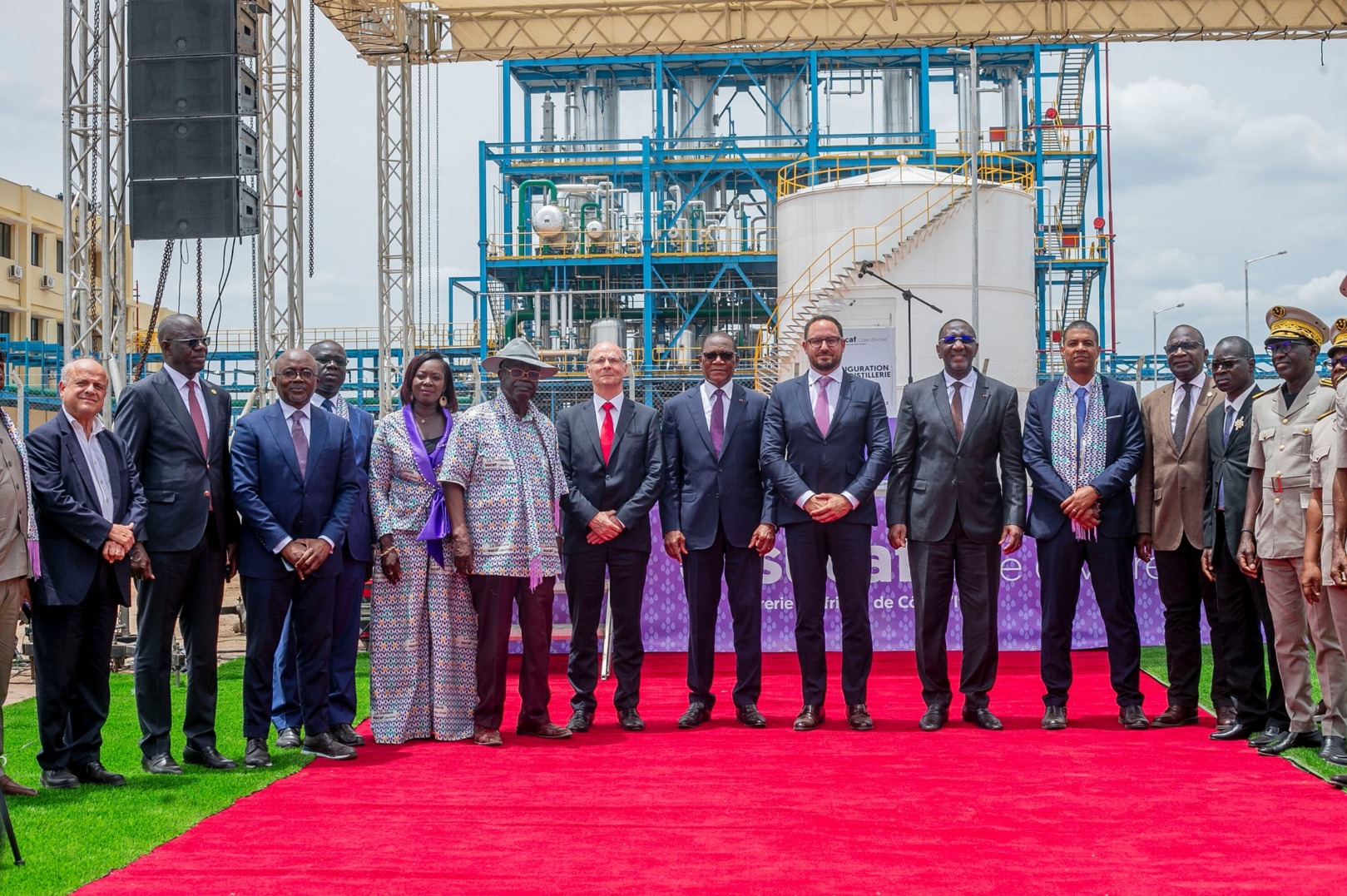
Ferké 2: Côte d’Ivoire Inaugurates Its First Sugar Cane Distillery
Minister of Planning and Development, Souleymane Diarrassouba, took part on Thursday, May 7, 2026, in the inauguration of Côte d’Ivoire’s first sugar cane distillery, located at the SUCAF-CI production site in Ferkessédougou (Ferké 2).
The ceremony, held under the patronage of Vice Prime Minister Téné Brahima Ouattara, was chaired by Agriculture Minister Bruno Nabagné Koné.
The industrial facility marks a historic milestone for Côte d’Ivoire’s sugar industry and strengthens the northern sugar-producing region as a major agro-industrial hub.
The Ferké 2 distillery reflects a strategy aimed at maximizing the full value chain of sugar cane, from production to industrial transformation.
Built with an investment of 18 billion CFA francs, the plant is expected to produce 12 million liters of 96-degree alcohol annually and create more than 400 jobs. The production is expected to cover nearly 50% of national demand.
The project will increase local processing capacity, secure market opportunities for growers and create prospects in the development of by-products such as ethanol and industrial derivatives.
On May 1, 2021, the Ivorian government and sugar companies SUCAF-CI and SUCRIVOIRE signed strategic performance contracts aimed at strengthening the competitiveness of the sugar industry. The overall investment program amounted to 151.063 billion CFA francs, including 71.332 billion CFA francs for SUCAF-CI and 79.731 billion CFA francs for SUCRIVOIRE.
The Ferké 2 distillery represents the culmination of that initiative.
Nearly 69 billion CFA francs have already been invested by SUCAF-CI, representing a 97% completion rate. The company also exceeded its production target of 124,193 tons of sugar by 2025, reaching a record output of 130,194 tons during the 2023/2024 campaign.
“This distillery is the result of commitments made five years ago between the State and sugar companies. The results demonstrate the private sector’s ability to deliver when supported by a favorable investment environment,” Diarrassouba said.
Authorities say the infrastructure will contribute directly to Côte d’Ivoire’s economic sovereignty by reducing dependence on imports, stabilizing prices and generating value across local territories.
The project is also aligned with the priorities of the National Development Plan (PND) 2026–2030, which places industrialization and local transformation of raw materials at the center of the country’s economic strategy.