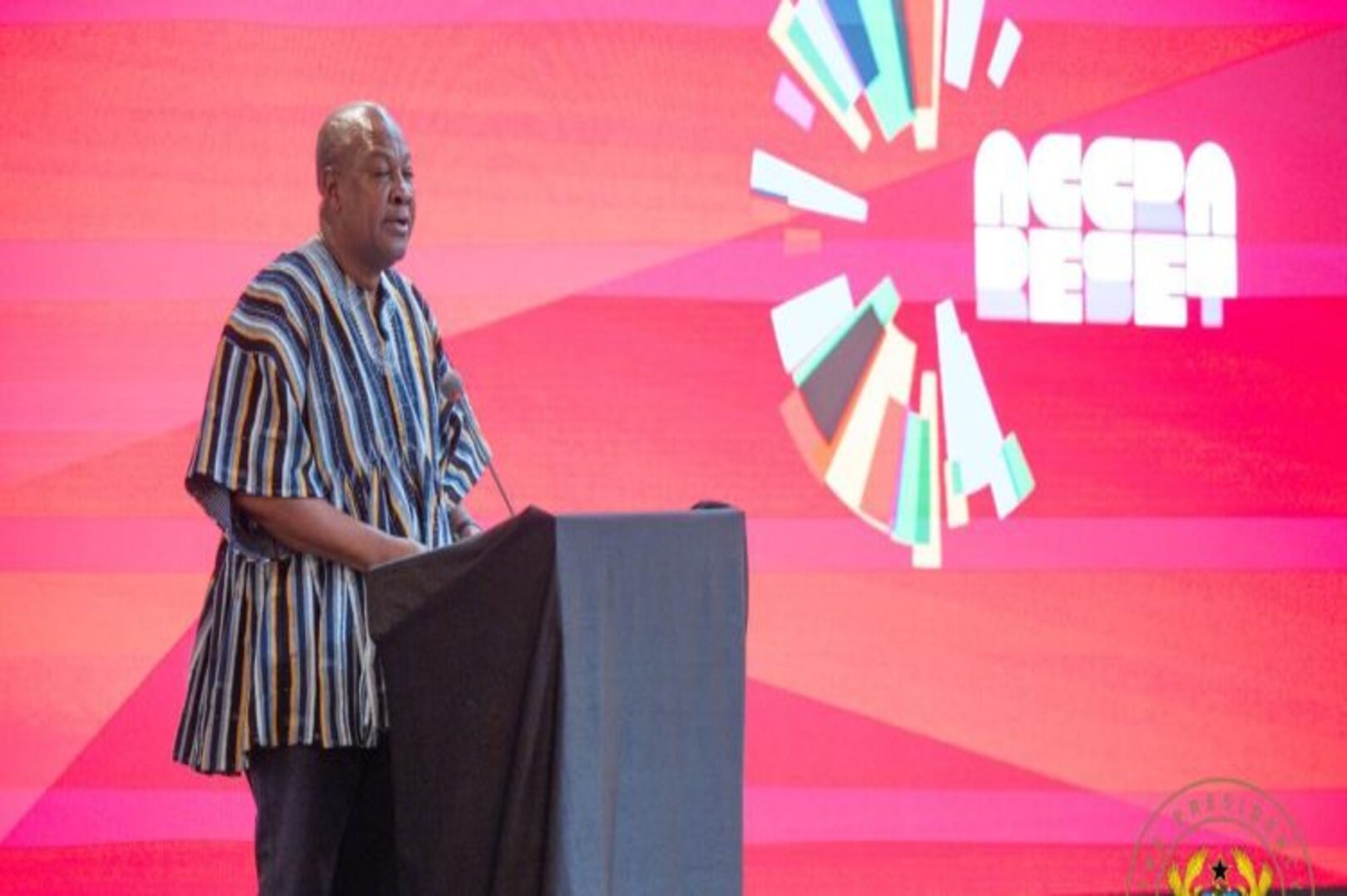
On the sidelines of the 39th African Union Summit, Ghanaian President John Dramani Mahama unveiled a series of bold reforms aimed at strengthening the country’s economic sovereignty. Speaking at a high-level side event titled “Accra Reset’s Addis Reckoning,” the president outlined plans to fundamentally reshape how Ghana manages its strategic natural resources, particularly cocoa and minerals.
At the center of the announcement is a major policy shift in the cocoa sector. Ghana, the world’s second-largest cocoa producer, will end its reliance on external financing to purchase cocoa beans. Instead, cocoa purchases will be funded in the national currency through domestic financing mechanisms, including local bonds. The move is designed to reduce dependence on foreign lenders and retain more value within the national economy.
President Mahama emphasized that the reform will also support greater local processing of cocoa, enabling Ghana to export more finished or semi-processed products rather than primarily raw beans. The strategy is expected to boost job creation, stimulate industrial growth, and strengthen the country’s position in global value chains.
In addition, the president announced that by 2030 Ghana will stop exporting raw mineral ores, including bauxite, manganese, and iron ore. These resources will be required to undergo local processing before export. The measure forms part of a broader industrialization agenda aimed at increasing domestic value addition and reducing structural dependence on raw commodity exports.
The reforms are embedded in the broader “Accra Reset” initiative, a program presented as a comprehensive economic reset focused on financial independence, currency stability, and structural transformation.
While the announcements have been welcomed by supporters as a decisive step toward greater economic sovereignty, analysts note that implementation will require significant investment in industrial capacity, financing systems, and regulatory reforms. The coming years will be crucial in determining whether Ghana can successfully translate this ambitious vision into measurable economic transformation.

