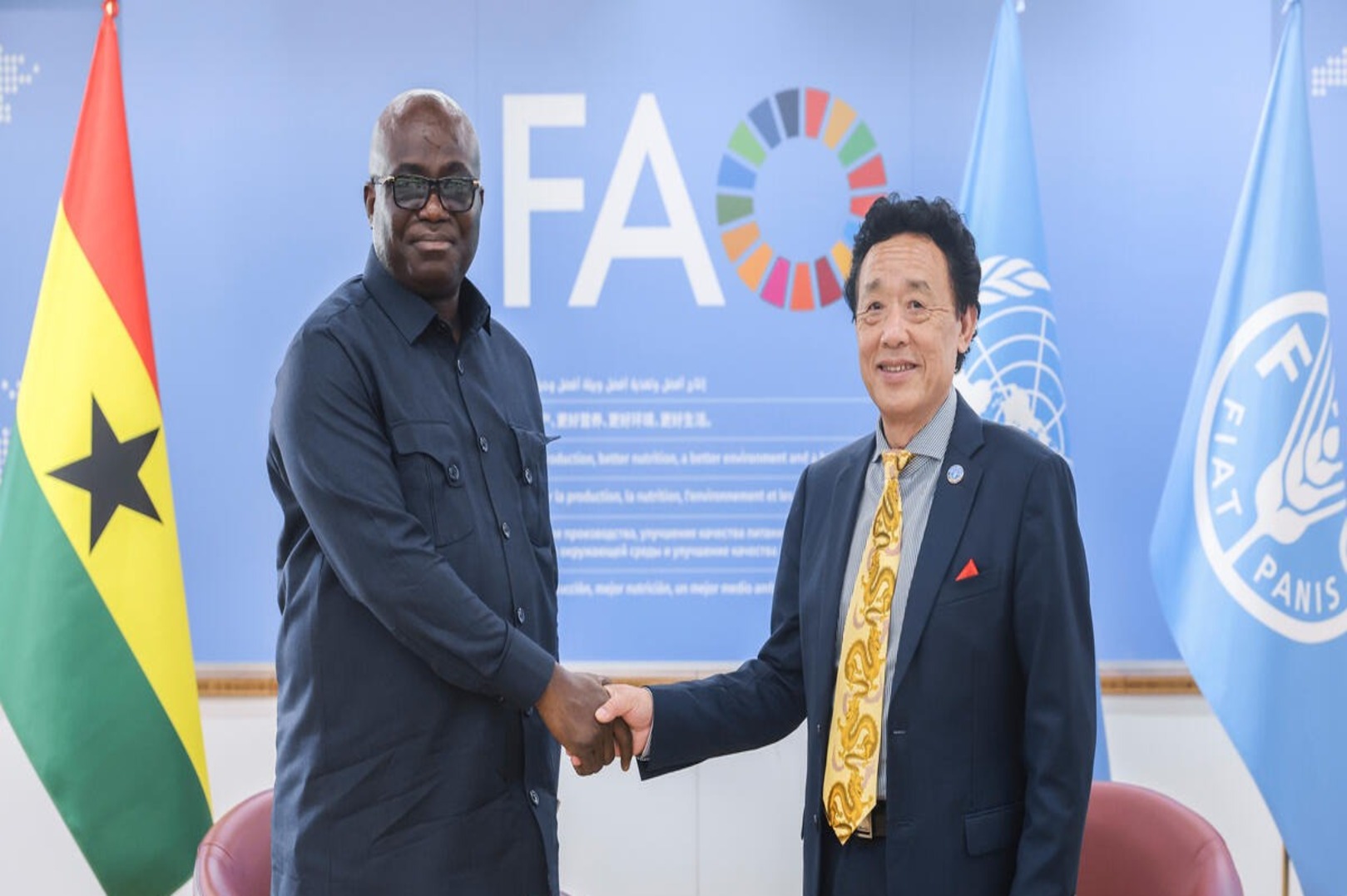
As part of President John Dramani Mahama’s economic recovery program, the Ghanaian government announced a strategic partnership with Chinese investors aimed at reducing palm oil imports by approximately 200 million USD (around 113 billion CFA francs) per year. The initiative is part of a broader agricultural transformation strategy positioned as a pillar of the country’s industrialization efforts.
During the Chinese New Year gala held in Accra on March 3, 2026, Eric Opoku, Ghana’s Minister of Agriculture, outlined a national policy focused on agro-industrial development and international cooperation. He emphasized that agriculture now occupies “a central place” in the country’s economic strategy under President Mahama.
The government highlighted several concrete measures to support the sector this year, including large-scale distribution of rice, maize, and soybean seeds, significant amounts of fertilizer for farmers, expansion of irrigation infrastructure, and construction of dams in the northern regions to reduce reliance on rainfall.
A major aspect of this policy is opening Ghanaian agriculture to Chinese investment, particularly in irrigation, mechanization, agro-processing, and agricultural machinery assembly. The government is offering structured agricultural zones and land banks to facilitate the establishment of foreign partners.
The flagship project of this cooperation is the Integrated Oil Palm Development Programme (2026–2032), which aims to develop 100,000 hectares of plantations, create 250,000 jobs, and significantly reduce Ghana’s reliance on imported palm oil, which currently costs around 200 million USD annually.
When asked about the nature of this cooperation, Minister Opoku emphasized that Ghana is not seeking aid or grants but aims to establish permanent joint ventures with Chinese companies to shift “from trade to production.”
Beyond reducing import costs, Accra hopes to leverage privileged access to the Economic Community of West African States (ECOWAS) market, which has more than 400 million consumers, to become a regional agricultural and industrial hub.
Analysts note that while ambitious, such partnerships present significant challenges: they require technology transfer, capacity building for local workers, and clear regulation to ensure that economic benefits reach all stakeholders, especially smallholder farmers. The success of reducing imports will also depend on Ghana’s ability to produce high-quality, competitive palm oil at scale.