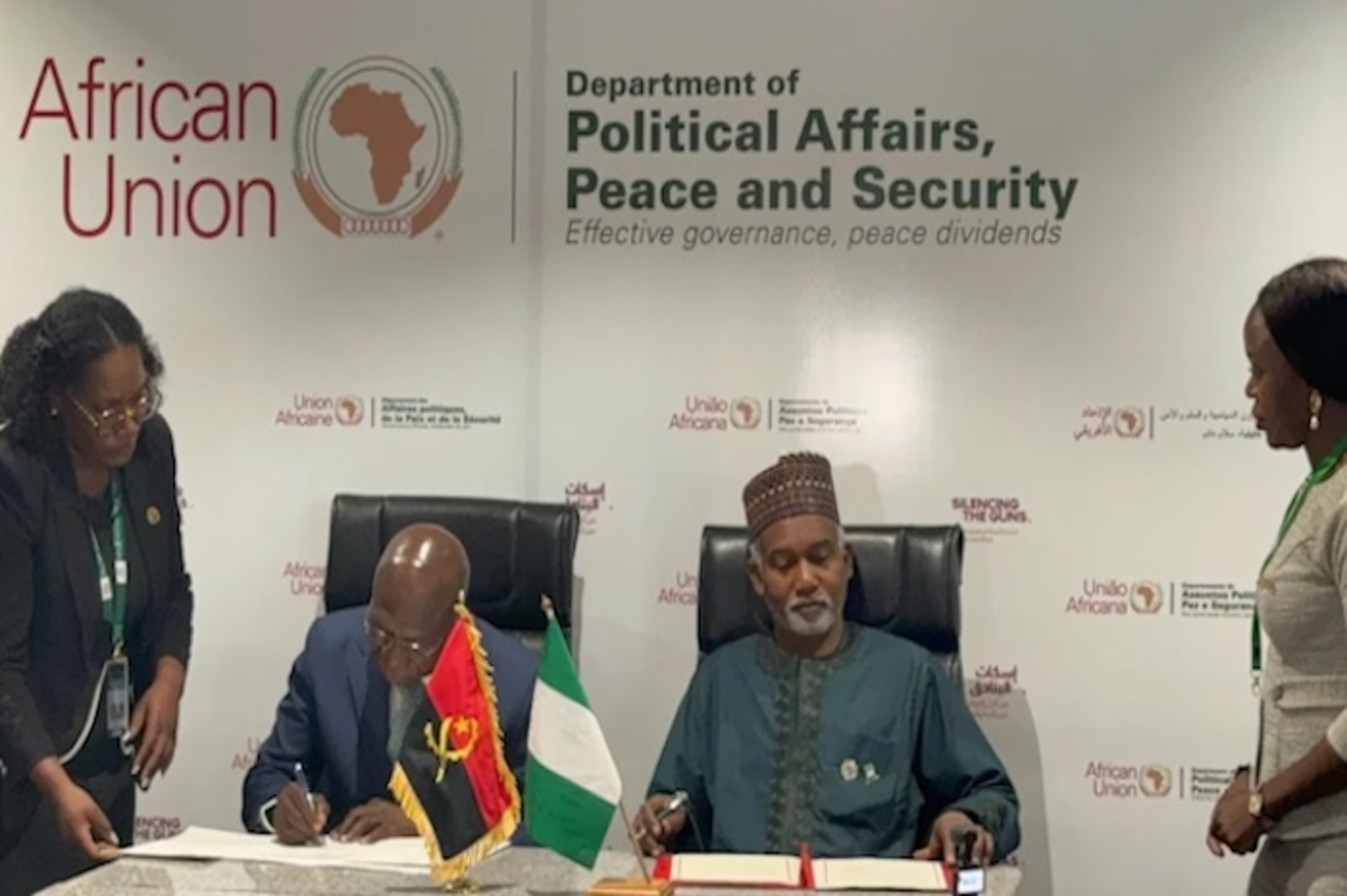
Nigeria and Angola have formalized a major bilateral agreement aimed at facilitating diplomatic exchanges between the two African powers by removing visa requirements for holders of diplomatic and official/service passports. The agreement was signed on 15 February in Addis Ababa on the sidelines of the 39th Ordinary Session of the African Union Assembly of Heads of State and Government.
The text, the result of lengthy discussions, reflects a shared commitment to removing administrative barriers that previously complicated official visits and diplomatic missions between Abuja and Luanda. It was signed by Nigeria’s Minister of Foreign Affairs, Yusuf Maitama Tuggar, and Angola’s Minister of External Relations, Téte António, representing their respective governments at the continental summit.
During the signing ceremony, Minister Tuggar described the initiative as long overdue and emphasized that it marks an important step toward strengthening political dialogue and institutional cooperation between the two countries. He noted that the visa exemption will enhance the ease of official exchanges, pave the way for new collaborations, and encourage joint initiatives across various sectors.
For his part, Téte António highlighted the deep historical ties between Nigeria and Angola, recalling Nigeria’s support during Angola’s struggle for independence. He characterized the agreement as a pragmatic and forward-looking milestone that consolidates an already strong relationship.
More than a procedural adjustment, the agreement fits into a broader dynamic of regional rapprochement and strengthened African partnerships in response to global challenges. By facilitating the mobility of diplomats and government officials, Nigeria and Angola aim to lay the groundwork for increased cooperation in areas such as trade, security, and regional policy coordination.
The significance of this rapprochement is underscored by Angola’s status as one of Southern Africa’s leading oil exporters and Nigeria’s position as West Africa’s largest economy. Simplifying official exchanges could unlock new economic opportunities for both nations at a time of rapid continental transformation.
Officials from both capitals have indicated that the pact could serve as a model for similar agreements in the future, potentially extending to other categories of travelers and sectors. Although the current exemption applies only to diplomatic and official passport holders, it may represent a first step toward broader liberalization of intra-African mobility.
At a time when the African Union is promoting initiatives such as the African Continental Free Trade Area (AfCFTA) and working to enhance the free movement of people across the continent, this bilateral agreement between Abuja and Luanda signals a shared determination to advance African integration beyond rhetoric.