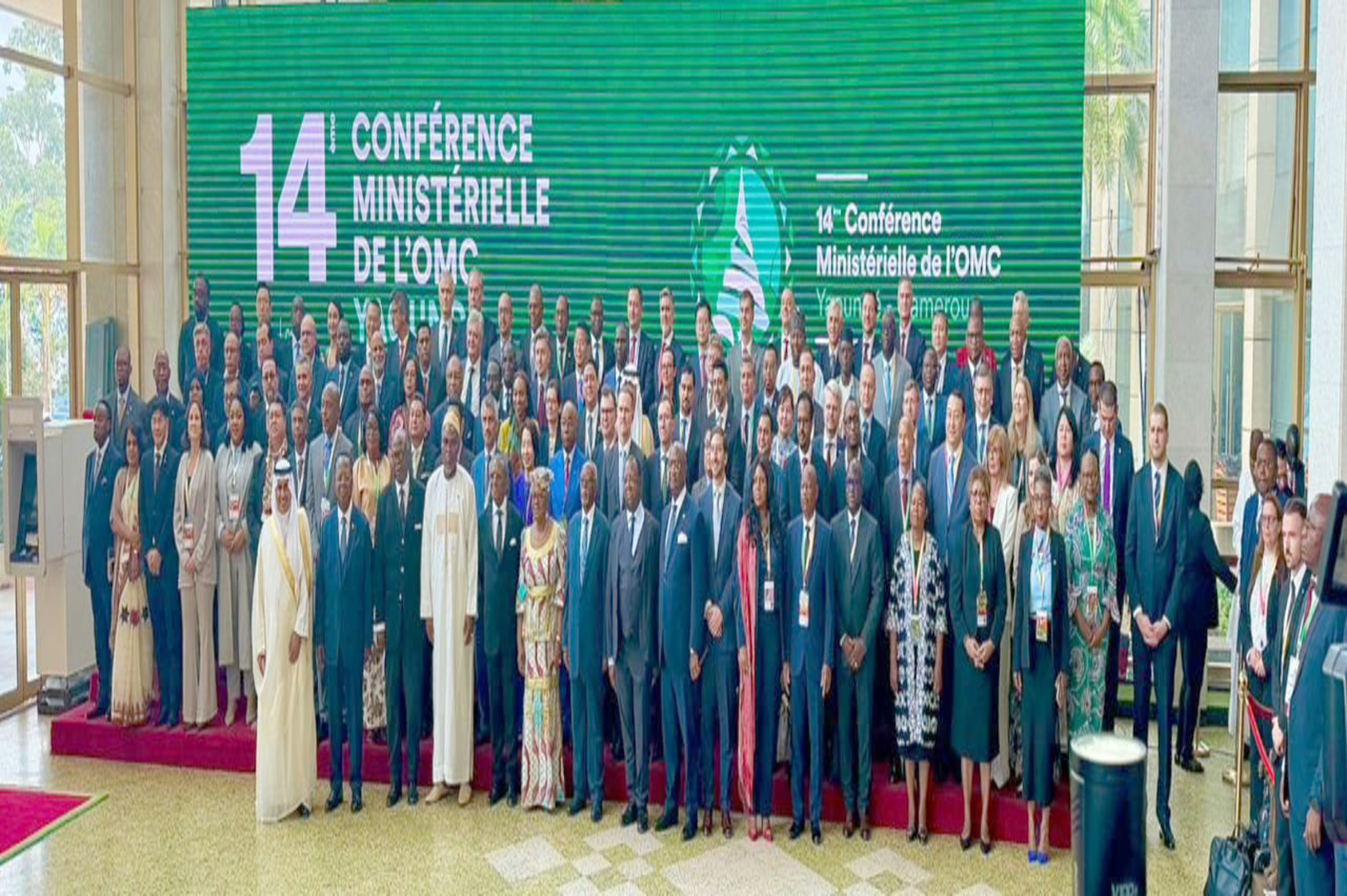
14th Ministerial Conference of the World Trade Organization in Yaoundé: Côte d’Ivoire Calls for Greater Fairness in Agricultural Trade
During the 14th Ministerial Conference of the World Trade Organization (WTO), which officially opened on Thursday, March 26, 2026, in Yaoundé, Cameroon, the Ivorian delegation, represented by the Minister of Trade, Industry and Handicrafts, Ibrahim Kalil Konaté, called for “greater fairness in trade in favor of farmers.”
“Agriculture is a vital sector for African economies. My country expresses concern over the lack of progress in negotiations. Practices that distort agricultural trade and unfairly penalize producers must be eliminated,” Konaté emphasized.
For Côte d’Ivoire, the minister continued, development must be at the core of reforms aimed at building “a more equitable and mutually beneficial trading system.”
“The country calls for the effective implementation of existing mandates to correct persistent imbalances, particularly in agriculture,” he added.
According to Minister Konaté, it is also essential for developing countries and least developed countries to have sufficient policy space to support their structural transformation, increase productivity, and strengthen competitiveness.
Regarding e-commerce, a central theme of the conference, Côte d’Ivoire highlighted key concerns of developing countries, particularly in terms of domestic revenue mobilization, strengthening digital capacities, and integration into the global digital ecosystem.
“These concerns must be fully taken into account,” the minister stated.
He also welcomed the joint WTO–World Bank initiative to make digital technology a catalyst for development.
Côte d’Ivoire further expressed satisfaction with the Agreement on Investment Facilitation for Development, reaffirming its support for incorporating this instrument into the WTO’s legal framework, given its potential to promote a more transparent, predictable, and attractive investment environment.
Several other voices, including those of the European Union and China, also called for unity and maintaining momentum in support of a rules-based multilateral trading system, while opposing unilateralism and protectionism.
Many countries stressed the importance of maintaining special and differential treatment that grants greater flexibility to developing countries.